Best Government Jobs for Young Graduates: Highest Salary Options in 2026
Published on August 13, 2026
Blogs

Best Government Jobs for Young Graduates
Every second household in India has that one conversation on loop — "beta, sarkari naukri kar lo, life set ho jayegi." And honestly? It's not bad advice, it's just usually given without any real detail. Which government job actually pays well? How much prep does it need? Is it even worth two years of your twenties studying instead of earning? Those are the real questions, and that's exactly what this article is going to answer — no vague "government jobs are good" filler, just the actual numbers and the actual paths.
Why Government Jobs Are Still a Big Deal for Youth in 2026
Private jobs move fast, pay well early, and then get unpredictable — layoffs, restructuring, that one bad quarter that changes everything. Government jobs move slower but rarely move backward. That trade-off is exactly why so many young people are still lining up for these exams every year.
Job security that private companies simply can't match. No layoffs, no sudden restructuring emails at 11 PM — once you're in, you're genuinely in for the long haul.
The salary story doesn't end at your starting pay. Government pay grows through fixed pay, commissions, regular increments, and a pension system that private jobs mostly don't offer anymore.
Perks quietly add up to a lot. Government housing, official vehicles, medical coverage, staff support — these aren't small things once you actually calculate their real money value.
Respect and social standing still matter here, whether we like admitting it or not. A government officer's designation still opens doors in ways a private job title sometimes doesn't, especially outside the big metros.
Competition is brutal; no sugarcoating that. Lakhs of applicants chase a few hundred seats in the top exams, so this path needs real commitment, not a half-hearted attempt squeezed in between other plans.
With the "why" out of the way, let's get into the roles that actually pay the best.
Top Highest Paying Government Jobs for Youth
1. IAS Officer (Indian Administrative Service): The one everyone's heard of, and for good reason. IAS officers run districts, implement policy, and eventually move into some of the most powerful administrative roles in the country. Starting pay sits around ₹56,100 a month, but that's really just the entry point — including housing, vehicle, staff support, and other perks, the real value of an early-career IAS package comfortably crosses ₹1 lakh a month, and it climbs sharply with seniority. At the very top, a Cabinet Secretary's total package can cross ₹4 lakh a month once perks are counted in.
2. IPS Officer (Indian Police Service): If IAS is about administration, IPS is about law and order — running police departments, managing crime prevention, handling law enforcement at a district or state level. Pay starts similarly around ₹56,100 a month and can go up to ₹2.25 lakh a month at senior levels, alongside government housing, a vehicle, and security staff. It's high-pressure work, no doubt, but the authority and respect that come with it are hard to match elsewhere.
3. IFS Officer (Indian Foreign Service): This one comes with a lifestyle most other government jobs simply can't offer — postings at embassies and diplomatic missions around the world. Base pay is comparable to IAS and IPS, but international postings add significant allowances on top, often making the effective take-home considerably higher than a domestic government role. If travel and diplomacy genuinely interest you, this is one of the most rewarding UPSC options out there.
4. RBI Grade B Officer: For commerce and economics-minded youngsters, this is arguably the best-paying entry-level government job around. Starting pay is roughly ₹80,000+ a month, and it can cross ₹1.5-2 lakh a month once you factor in promotions and allowances. The work is largely research, economics analysis, and policy documentation — a great fit if you enjoy numbers and reports more than fieldwork, and it comes with genuinely excellent work-life balance compared to the UPSC services.
5. SEBI Grade A Officer: Similar territory to RBI Grade B, but focused on regulating India's capital markets instead of the banking system. Pay is competitive from day one, and the exam, while tough, has a slightly narrower syllabus than the full UPSC Civil Services exam. A strong option for finance and commerce graduates who want government stability without committing years to UPSC prep.
6. Indian Economic Service (IES): A lesser-known but genuinely strong option for economics graduates. Officers here work on economic policy, planning, and research for the government, and the pay scale is comparable to other Group A civil services. If you've got an economics degree and don't want to go the full IAS/IPS route, this is worth serious consideration.
7. Indian Engineering Services (IES – Engineering): For engineering graduates specifically, this is one of the most rewarding technical government paths. Officers work in departments like railways, telecom, and public works, with pay scales matching the Group A civil services and strong long-term technical career growth built in.
8. PSU Officer Roles (ONGC, NTPC, BHEL, GAIL, Coal India): Public Sector Undertakings hire engineers, managers, and finance professionals through exams like GATE or their own recruitment drives, and the pay here can genuinely rival private sector corporate jobs. Coal India managers, for instance, can earn up to ₹1.8 lakh a month at senior levels, and PSU jobs generally combine private-sector-style pay with government-level job security — a solid middle ground for a lot of engineering graduates.
9. Public Sector Bank Officer (PO/Manager): Bank PO roles remain one of the most accessible high-paying government-adjacent jobs for graduates. Starting pay is usually around ₹45,000 a month, rising past ₹1.2 lakh a month within about eight years through regular promotions. It's a strong, steady option for commerce and general graduates who want banking-sector pay without needing an MBA.
10. Defense Officer Roles (Army, Navy, Air Force): For those drawn to discipline, adventure, and service, defense officer roles offer a genuinely strong combination of pay, prestige, and unique career experiences most civilian jobs can't replicate. Entry routes like CDS lead into officer ranks with competitive pay plus substantial allowances, while options like Agniveer offer a faster four-year entry with a solid payout at the end, useful for those who want a shorter commitment before deciding on a longer defense career.
How to Actually Prepare for These Exams
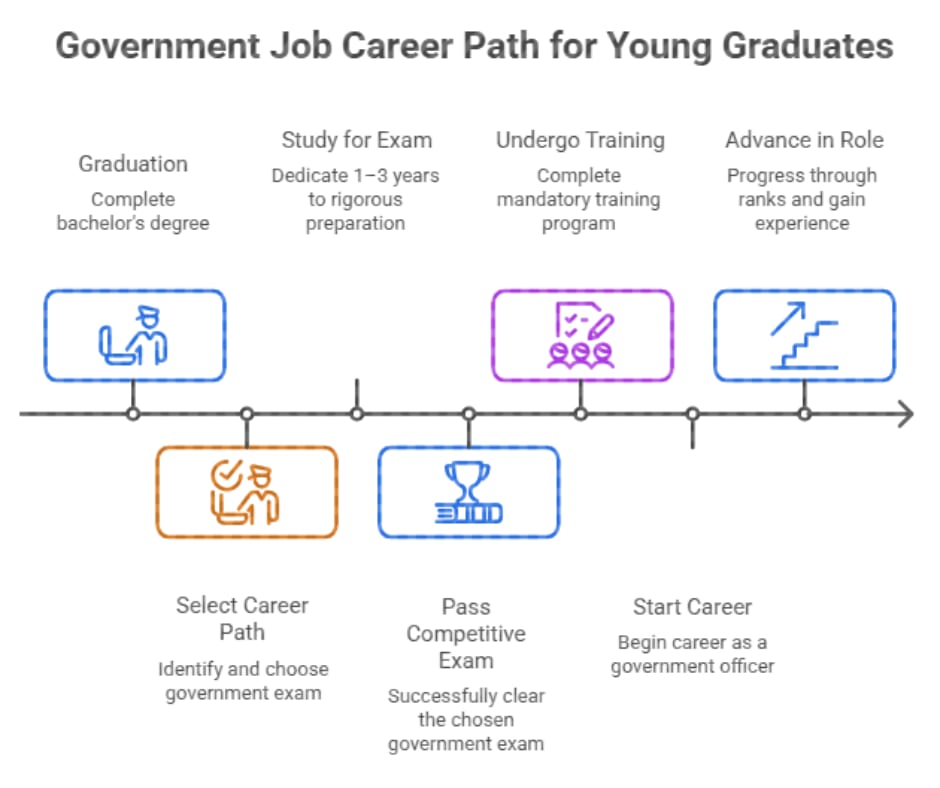
Pick your exam based on your background, not just the salary number. Arts and humanities graduates are naturally well-suited to UPSC's IAS/IPS/IFS route, while commerce and finance grads often do better aiming at RBI Grade B or SEBI Grade A.
Be honest about the time commitment. Most of these exams genuinely need one to three years of serious, focused preparation — treating it as a side activity alongside a full-time job rarely works out.
Don't ignore the “opportunity cost” conversation. Yes, you'll likely earn less in your prep years than a friend who joined a private company straight away — but factor in the long-term pension, stability, and perks before writing off the government route as "not worth it."
Start with proper study material and a realistic timeline, rather than jumping straight into coaching hype. A structured plan with regular mock tests tends to beat last-minute cramming every single time in these exams.
Keep an eye on official notifications regularly. UPSC, SSC, RBI, and PSU recruitment cycles run on fixed annual calendars, so missing a notification window can cost you an entire year of preparation.
Final Word
Government jobs in 2026 aren't just about a stable paycheck anymore — for the right candidate, they genuinely rival private sector pay while adding security, respect, and long-term benefits that most private jobs simply can't offer. The trick isn't chasing whichever job sounds the most impressive at a family function. It's picking the one that actually matches your background and your strengths, and then committing to the preparation it genuinely demands. And once you land the job, don't forget that getting promoted depends on more than simply doing your work — The Skill That Decides Who Gets Promoted explains what can actually move your career forward. The seats are limited, sure, but they're not going anywhere — every year brings a fresh set of vacancies, and someone's going to fill them. Might as well be you.