How to Cold Email or DM for a Job Without Sounding Desperate (And Actually Get a Reply)
Published on July 22, 2026
Blogs
How to Cold Email or DM for a Job
You found the perfect company. No job posted. No "careers" page update in months. So you do what everyone tells you to do — you send a cold email or a LinkedIn DM into the void, and then you wait. And wait. And eventually convince yourself that cold outreach just doesn't work.
It works. Just not the way most people do it. Here's the actual data behind what makes someone reply to a stranger asking about a job, and how to write the kind of message that gets answered instead of ignored.
Why job-related cold outreach is actually your best shot, statistically
This might be the most encouraging stat in this entire article: cold outreach aimed at recruiters and HR specialists performs dramatically better than almost any other category of cold messaging. HR specialists respond to cold outreach at roughly 8.5%, more than double the overall average across other industries, and recruiting emails see some of the highest response rates of any vertical, at 5.8 to 7.2%, well above categories like SaaS or financial services.
There's a simple reason for this. The recipient has direct personal upside — a new hire benefits their own team or their own bottom line in a way most cold sales emails never do. You're not asking a stranger to spend their company's money. You're offering them a potential solution to a problem they probably already have.
The single biggest mistake: sending a generic message and expecting a miracle
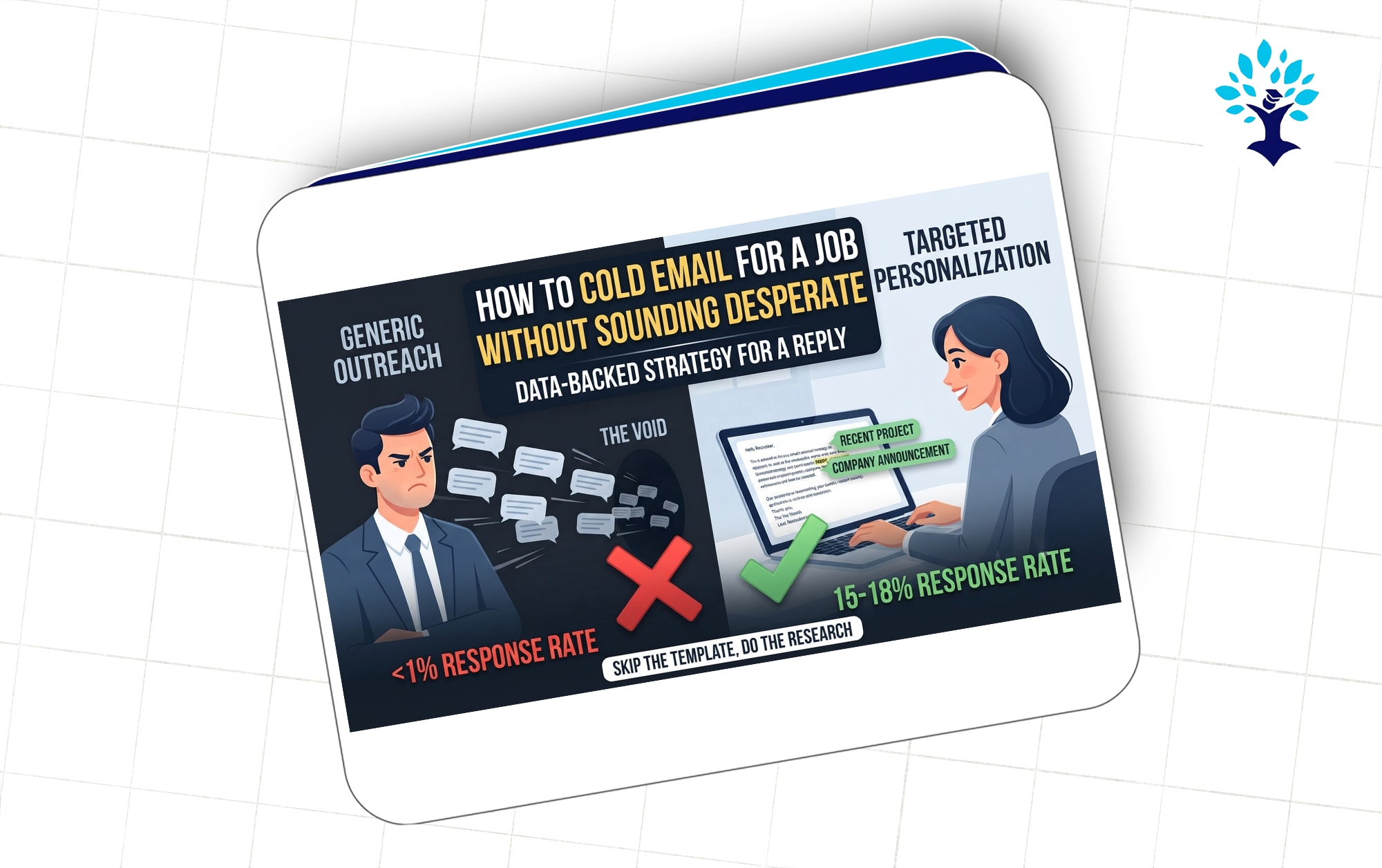
Here's the number that should stop you before you copy-paste another template: generic cold emails average less than 1% response rate, while a well-personalized message can reach 15 to 18% — a fifteen-times improvement from the exact same number of messages sent. Personalization isn't a nice-to-have here. It's the entire difference between getting ignored and getting a reply.
Reference something specific — a recent project, a company announcement, a mutual connection, anything that proves you actually looked
Inserting just a first name into a template doesn't count as personalization — it has to be specific to them, not swappable for any other recipient
Deep personalization with company-specific research can push reply rates as high as 17 to 18% compared to roughly 7% without it
Keep it short — shorter than you think you need to be
People overwrite these messages constantly, trying to cram in their entire resume. Don't. The most effective cold emails for job opportunities run between 50 and 125 words, and emails kept under 125 words see the highest reply rates overall. Anything longer starts feeling like homework the recipient has to do, and busy people don't do homework from strangers.
A strong structure looks like this:
One line on who you are and why you're reaching out specifically to them
One or two lines on a relevant accomplishment, ideally something measurable
One clear, low-effort ask — a fifteen-minute call, not a vague "let me know your thoughts"
A specific subject line, not generic — something like "Marketing Professional – Proven Track Record in B2B Growth" performs far better than a vague line like "Job Inquiry"
Don't give up after one message — this is where most people quit too early
This is genuinely the most underused lever in cold outreach for jobs. Around 42% of all replies come from follow-ups, not the first message, and a single follow-up alone lifts reply rates by nearly 66%. Separately, research shows 80% of positive responses happen after the second or third contact, not the first.
Send 2–3 follow-ups spaced about 5–7 days apart
Add something new each time — a different angle, a relevant article, a small additional detail — rather than just repeating yourself
Stop after 4–5 total touches; campaigns beyond that point show steep diminishing returns and start to feel like pestering instead of persistence
Tone matters more than polish
The instinct with cold outreach is to sound impressively formal, like you're writing a cover letter. Resist it. The strongest cold emails read like one colleague reaching out to another with a useful suggestion — confident and conversational, not stiff or overly formal. Avoid both extremes: skip the "Dear Sir or Madam" stiffness, but also skip anything that sounds like a sales pitch with exclamation points.
Timing actually makes a measurable difference
This sounds like a minor detail until you see the numbers. Thursday mornings between 9 and 11 AM tend to show the highest open rates, while early afternoon on weekdays tends to produce the highest reply rates. Avoid weekends and Friday afternoons entirely — that's when inboxes go quiet, and your message gets buried under Monday's pile before anyone even sees it.
Smaller, targeted lists beat mass outreach every time
If you're reaching out to multiple companies, resist the urge to blast the same message to fifty people at once. Smaller, highly targeted campaigns of fifty recipients or fewer outperform larger lists by nearly three times, because the time saved by mass-sending gets eaten right back up by how impersonal it inevitably reads.
Cold email vs. DM — when to use which
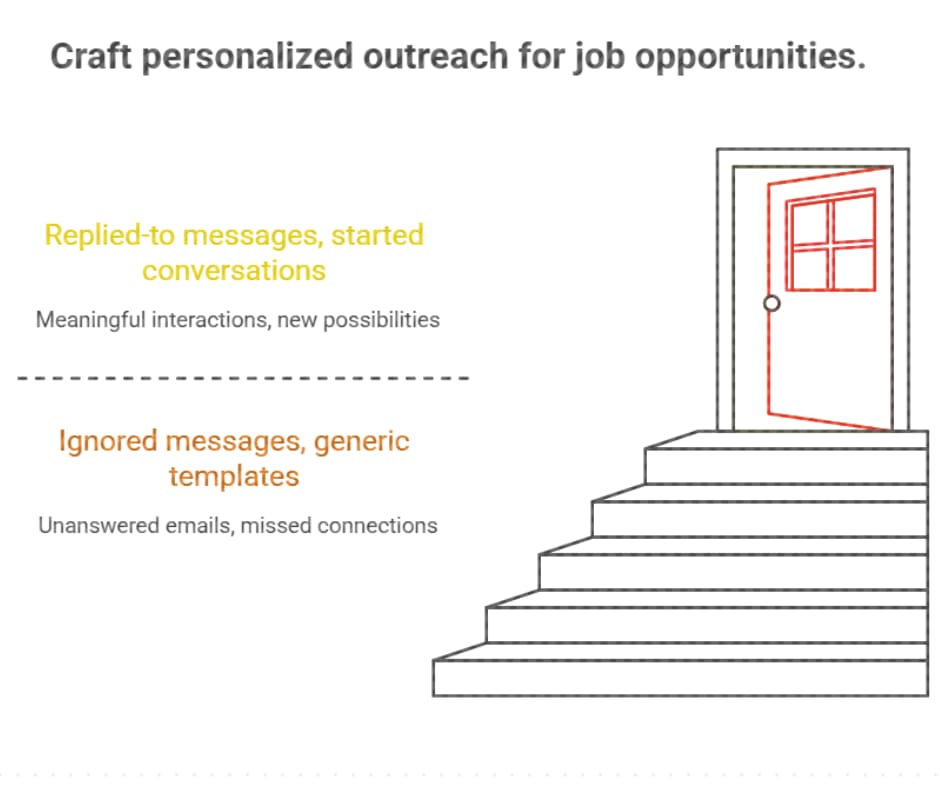
Both channels work, but they're not interchangeable in every situation. Cold email offers higher volume potential and tends to work better for more formal outreach, while a LinkedIn DM benefits from something email can't replicate — visible mutual connections, shared groups, or a recent post you can genuinely reference. If you already follow the person, comment on their content, or share a connection, the DM usually feels more natural. If you're reaching someone cold with zero shared context, a well-researched email often lands better. If your outreach leads to an interview, be prepared for AI Assited Hiring as well, since many companies now use automated screening and interview tools before a recruiter makes the final decision.
What this all actually adds up to
Cold outreach for a job isn't a numbers game where more messages automatically equals more replies — it's closer to the opposite. A handful of genuinely researched, specific, well-timed messages with a real follow-up sequence will consistently outperform fifty generic ones sent into the void. The data backs this up clearly: personalization, brevity, and persistence aren't optional extras here. They're the entire mechanism that turns a cold message into an actual conversation.