Beyond "Data Scientist": The Real Career Map for Analytics in India
Published on August 26, 2026
Blogs
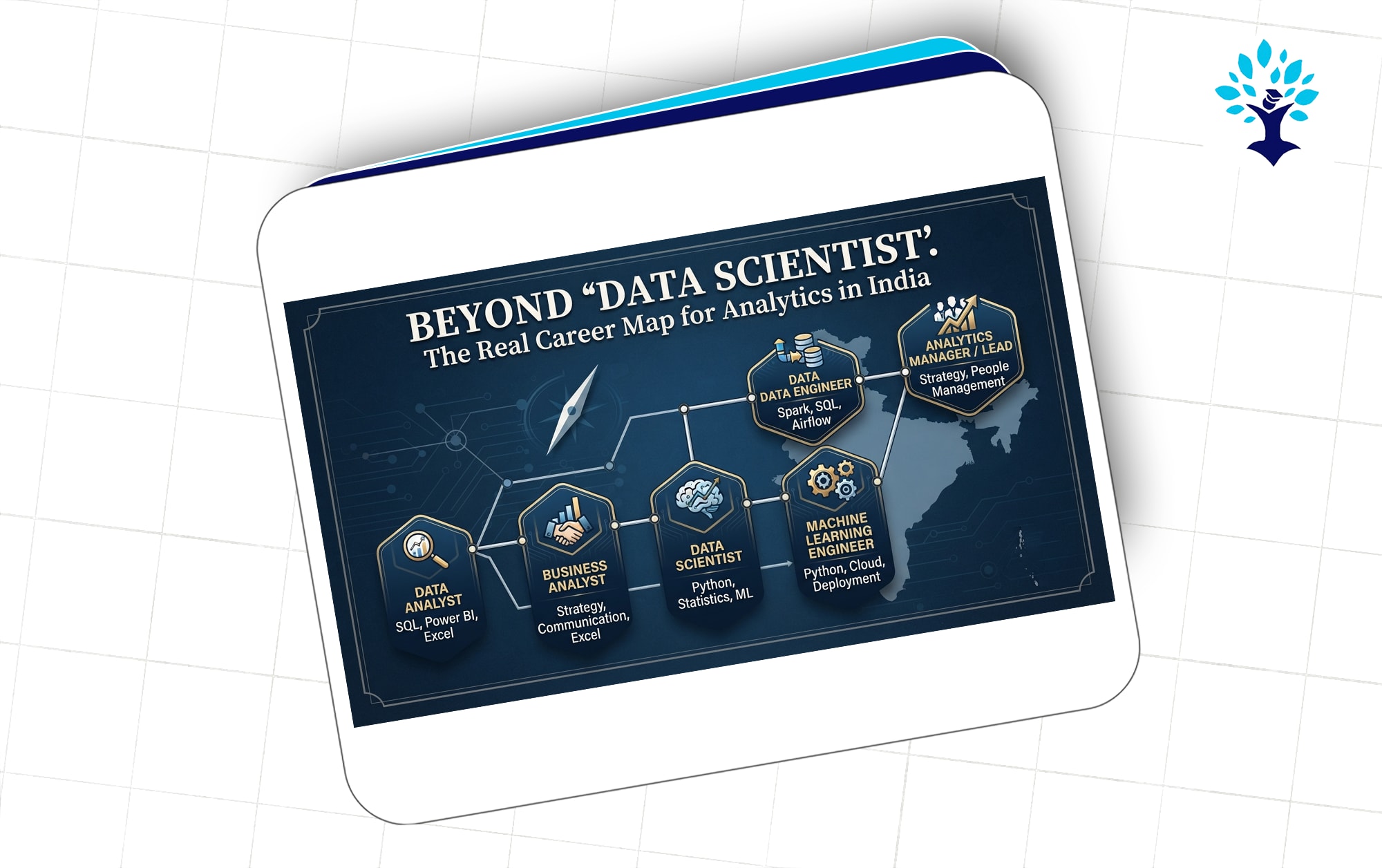
The Real Career Map for Analytics in India
Ask ten people what a data scientist actually does day to day, and you'll get ten different answers, most of them vague. "There's some work involving numbers," someone will say, shrugging. That vagueness is exactly why so many students and job switchers hesitate to enter this field — it sounds impressive on LinkedIn, but nobody explains what the actual jobs, titles, and salary brackets look like once you're past the buzzword stage.
Data science and analytics aren't one job. It's a whole cluster of roles, each paying differently, each wanting a slightly different skill set, and each suited to a different kind of person. Some of you will love the pure statistics side. Some will hate it and thrive in the business-facing analyst roles instead. This piece breaks the whole map down properly, so you're not picking a career based on a buzzword you saw in a job posting.
Why This Field Keeps Growing Every Year
Every company sitting on a pile of data — and by now that's most companies — eventually realizes the data itself is worthless without someone who can turn it into a decision. That's the entire reason this field refuses to slow down. A retail chain needs someone to predict which stock will run out next month. A bank needs someone to flag fraudulent transactions before they clear. A hospital chain needs someone to model which patients are at risk of readmission. None of that happens without analytics talent, and none of it is going away anytime soon.
What's changed recently is how specialized the hiring has gotten. Companies used to hire one "data scientist" and expect them to do everything from cleaning spreadsheets to building deep learning models. That's rare now. Roles have split into distinct tracks with their own pay bands, and knowing which track fits you changes both your learning path and your paycheck.
Data Analyst
This is where most people start, and there's no shame in that — it's also one of the more stable, consistently hiring roles in the entire field. A data analyst pulls insights out of existing data, builds dashboards, and answers the "why did sales drop in March" kind of questions that leadership actually asks.
Fresh graduates typically land ₹4–7 LPA here, and with three to five years of solid dashboard and reporting experience, that moves to ₹10–16 LPA. SQL is non-negotiable in this role — you cannot fake your way through an interview without it. Excel remains surprisingly relevant too, along with a visualization tool like Power BI or Tableau. What actually separates the candidates who get hired from the ones who don't is whether they can explain a business insight in plain language, not just produce a chart nobody in the room understands.
Data Scientist
The title everyone chases, and for good reason — the pay reflects real technical depth once you get past the entry level. This role builds predictive models, works with machine learning, and typically needs a stronger statistics and programming background than an analyst role does.
Entry-level: ₹6–10 LPA
3–6 years experience: ₹18–32 LPA
Core skills expected: Python or R, statistics, machine learning fundamentals, and enough SQL to pull your own data without waiting on someone else
One thing worth being honest about: this role has gotten more competitive than it was three years ago. A generic "I completed a data science course" resume doesn't cut it anymore. Interviewers want to see projects with real datasets, documented thinking, and results you can defend under questioning.
Business Analyst
Somewhere between the technical world of data science and the strategic world of management sits the business analyst — someone who understands data well enough to work with it, but spends more time translating numbers into decisions for leadership.
Pay for this role runs ₹5–9 LPA at entry level, climbing to ₹15–25 LPA for experienced professionals who've built a track record of driving real business outcomes. The skill mix here leans toward communication and stakeholder management as much as technical ability — Excel, basic SQL, and a solid grip on how to present findings to people who don't want to see a regression equation.
Machine Learning Engineer
This one sits closer to software engineering than pure analytics, and it pays like it. ML engineers take the models data scientists build and turn them into systems that actually run in production, reliably, at scale.
Entry-level pay tends to start around ₹7–12 LPA, and experienced ML engineers with three to six years behind them regularly clear ₹22–38 LPA. Strong Python, understanding of model deployment pipelines, and familiarity with cloud platforms matter a lot here. It's a role that rewards people who like the engineering side of things as much as the modeling side — if debugging a broken deployment pipeline sounds tedious to you, this probably isn't your lane.
Data Engineer
Nobody's model works without clean, well-structured data reaching the right place at the right time, and that's the entire job of a data engineer. Less glamorous than "building AI models," but arguably more in demand, since every analytics and ML team depends on this infrastructure existing in the first place.
Entry-level: ₹6–11 LPA
3–6 years experience: ₹18–32 LPA
Skills that matter: SQL, Spark, Airflow, and comfort with a cloud data warehouse like Snowflake or BigQuery
Analytics Manager or Lead
For people who've spent a few years in analyst or data scientist roles and want to move into leading a team rather than only executing individual projects, this is the natural next step. It pays well because it combines technical credibility with the ability to manage people and set direction.
Salaries here typically range from ₹20–40 LPA depending on team size and company scale, and the role expects someone who can still read a model output critically while also managing stakeholder expectations, hiring decisions, and project timelines.
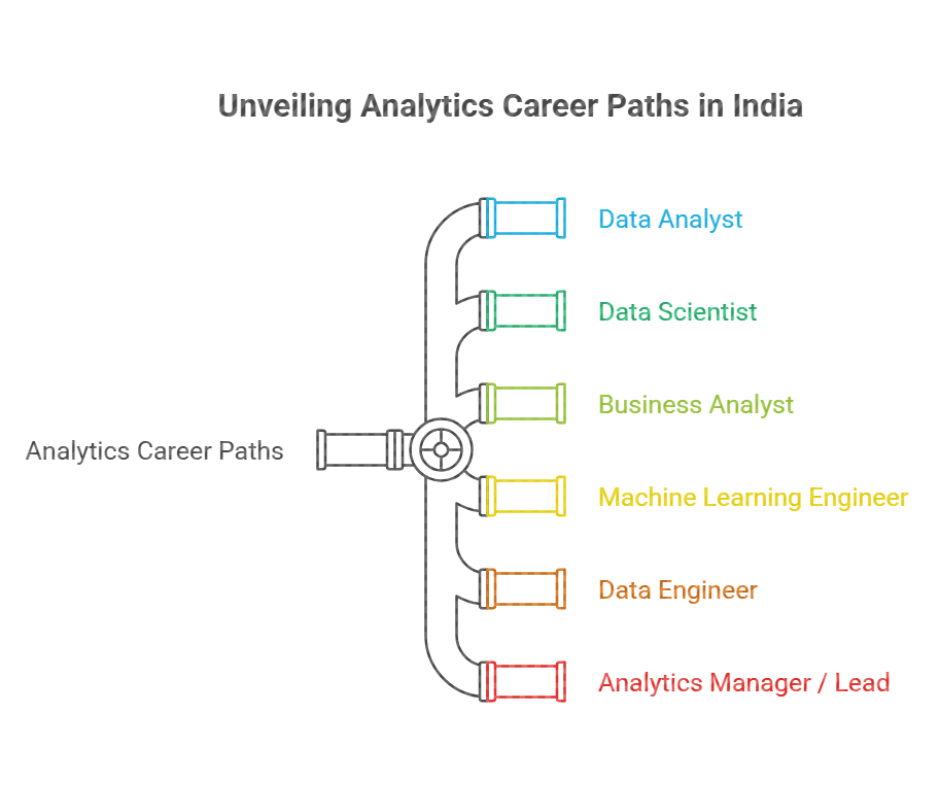
Picking the Right Track for You
A lot of career confusion in this field comes from treating "data science" as one single path instead of the branching tree it actually is. A few honest questions help narrow it down fast:
Do you enjoy the statistics and math side, or does it feel like a chore you're tolerating to get the job title? That answer alone rules out or rules in the data scientist track pretty quickly
Would you rather build systems that run reliably at scale, or would you rather explore data and find insights? The first points toward ML engineering or data engineering, the second toward analyst or data science roles
Are you more energized talking to business teams and translating numbers for them, or would you rather be left alone with a dataset for six hours? Business analyst roles suit the former; deep technical roles suit the latter
Getting Your First Break Into the Field
Certifications alone rarely move the needle anymore, no matter what the course marketing tells you. For students trying to enter analytics without prior experience, an early internship can be one of the fastest ways to turn classroom knowledge into something employers can actually evaluate. What actually gets attention:
A portfolio with two or three real, end-to-end projects using public datasets — not tutorials copied and pasted, but something you genuinely explored and can explain
Comfort with SQL that goes beyond basic SELECT statements, since almost every role on this list assumes you can pull and clean your own data
One area of depth rather than a shallow understanding of ten tools — pick analytics, ML, or engineering and go deep before trying to be a generalist
Applying to analyst roles first if you're a fresher, even if data scientist is the eventual goal, since the analyst track builds the foundation and the resume credibility that makes the jump easier later
Final Thought
Data science stopped being one job a while back, and treating it that way is probably what's been slowing your career decision down. There's a track in this field for the person who loves statistics, the person who loves building systems, and the person who'd rather sit across the table explaining numbers to a room full of managers. Figure out which one actually sounds like a normal Tuesday to you, and build toward that specific role instead of chasing the buzzword. That's where the real salary numbers on this list start showing up.