The Job Search Has Quietly Changed: 5 Shifts Every 2026 Candidate Needs to Know
Published on July 26, 2026
Blogs
5 Shifts Every 2026 Candidate Needs to Know
Sent out fifty applications last year and heard back from three? You're not imagining it. Job hunting in 2026 doesn't run on the same rules it did even eighteen months back. Resumes get read differently now, skills are starting to matter more than titles, and half the time, the first "reader" of your application isn't even human.
None of that makes finding a job impossible. It just means the old playbook is out of date, and the people actually getting hired right now are the ones who noticed the shift and moved with it. Here's what's really driving outcomes this year, and what you can do about each piece of it.
1. Your Resume Isn't a One-Time Document Anymore
Remember saving a resume as "Final_Resume_v2" and reusing it for the next three years without touching it again? That doesn't really work anymore. Recruiters now expect something closer to a living record of your growth than a page frozen at your last promotion.
The emphasis has shifted, too. Nobody's impressed by a list of what you were responsible for. They want proof of what actually happened because you showed up.
Turn task descriptions into outcomes wherever you honestly can. "Handled customer queries" becomes "Resolved 40+ daily queries with a 95% first-response satisfaction score" — same job, completely different impression.
Touch your resume up every couple of months instead of only when you're desperate for a new role. A finished certification, a wrapped-up project, a new tool you picked up at work — add it while it's fresh instead of trying to remember it all six months later.
A longer resume is fine once your experience actually justifies it, but padding a page with vague filler to look senior tends to backfire fast. Relevance still wins over length, every time.
Keep one messy master resume with absolutely everything you've done, and trim a tailored version out of it for each application. Rebuilding from scratch every time is exhausting and, honestly, unnecessary.
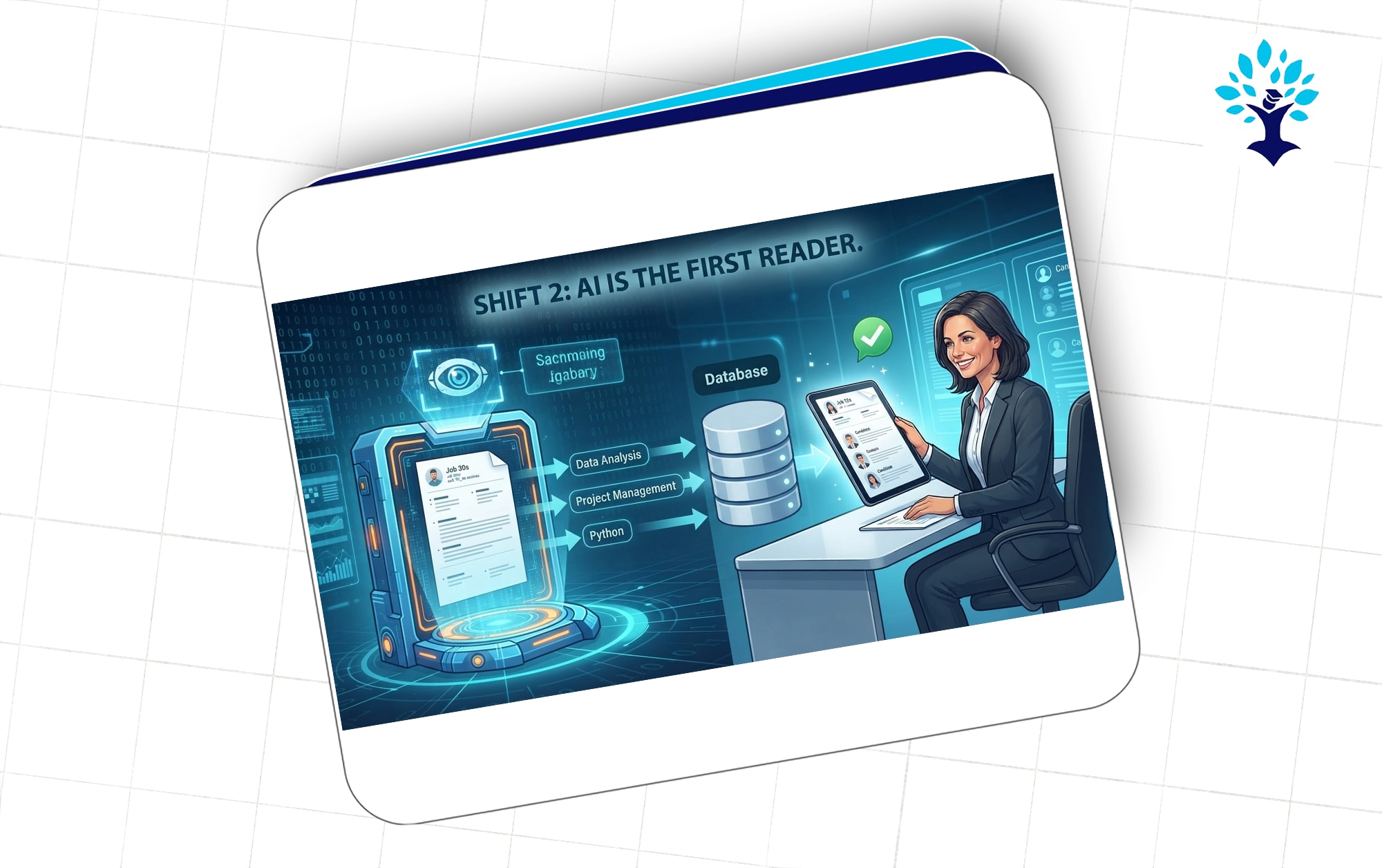
2. AI Is Reading Your Resume Before Any Human Does
Applicant Tracking Systems aren't new, but they've gotten noticeably sharper this year, and a lot more companies — big corporates and mid-sized Indian firms alike — now run every application through one before a recruiter ever lays eyes on it.
This isn't really about tricking a robot. It's about making sure a resume that's genuinely good enough doesn't get filtered out over something silly.
Mirror the exact wording from the job posting wherever it's true for you. If the listing says "stakeholder management" and yours says "client coordination," the system might completely miss that you mean the same thing.
Skip the fancy fonts, tables, and graphics that look impressive to a human but confuse a parsing tool. Plain and clean beats stylish almost every time here.
List both the full term and the short form for key skills — write out "Search Engine Optimization (SEO)" rather than just one or the other, since different systems search for different versions.
Apply through the company's own careers page when that option exists. Some ATS platforms treat direct applications differently from those routed through a third-party job board.
3. What You Can Actually Do Matters More Than What You're Called
Job titles used to carry serious weight. "Senior Executive" opened doors that "Associate" simply didn't, regardless of what either person actually did all day. That's loosening up now. More employers are hiring for skills and adaptability first and worrying about the title second.
This works in favor of a lot of people who've been underestimated by their designations — career switchers, freshers with strong project work, anyone stuck under a vague title at a small company.
Open your profile summary with capabilities instead of your last job title. "Skilled in data analysis, client communication, and process automation" tells a recruiter more in five seconds than "Assistant Manager" ever will.
Short courses and certifications carry weight now, particularly in fast-moving fields like digital marketing, data analysis, and IT support. A finished certification with a small project attached usually beats a bare line item.
If you're switching industries, don't hide the switch — translate it instead. A teacher moving into corporate training can frame classroom management as stakeholder communication and curriculum planning as content strategy.
Freshers benefit here more than they realize. Internships, college projects, and even solid freelance work can outweigh not having an impressive job title yet.
4. Being Comfortable With Change Has Become a Real Skill
As AI tools get baked deeper into daily work, being okay with new tools and shifting workflows matters more every year. Employers usually aren't hunting for AI experts. They're hunting for people who won't freeze up or push back the moment a new system or process gets rolled out.
Funnily enough, this hasn't made human judgment less important — if anything, it's made it stand out more by contrast.
Get your hands on at least one or two AI-assisted tools relevant to your field, even at a very basic level. Comfort matters more than mastery for most roles right now.
In interviews, mention a time you adapted to a sudden process change or new software, even something small. It's a more relevant story to tell than it used to be a couple of years ago.
Don't undersell your soft skills. Creativity, empathy in client-facing work, and clear thinking under pressure are exactly the things automation still can't quite replace, and most employers already know it.
Treat every new tool you're handed at your current job as a talking point for your next interview instead of just something you have to put up with.
5. Networking Still Beats Sitting Back and Waiting
For all the talk about AI hiring tools and online application portals, the single most reliable route into a job in 2026 hasn't changed one bit: knowing someone, or being known by someone, who can put a good word in for you. Cold applications still work, sure, but they're stuck competing against hundreds of others sitting in the same inbox. A referral usually skips most of that line entirely.
Reconnect with old colleagues, classmates, and professors before you actually need something from them. Relationships you only build when you're job hunting tend to feel exactly like what they are.
Comment on posts in your field on LinkedIn instead of just scrolling past them silently. Visibility builds up slowly, but it does add up over time.
Ask for informational chats, not favors. "Can I ask you fifteen minutes about how you got into this field?" gets a far warmer response than "Any openings at your company right now?"
Local job fairs, alumni groups, and industry meetups still turn up real leads, especially in sectors where hiring happens as much through word of mouth as through job boards. These hiring trends don't just apply to jobs in India. If you're planning to build an international career, understanding why working overseas isn't a fantasy can help you prepare for global opportunities with the right skills, resume, and job search strategy.
Final Thought
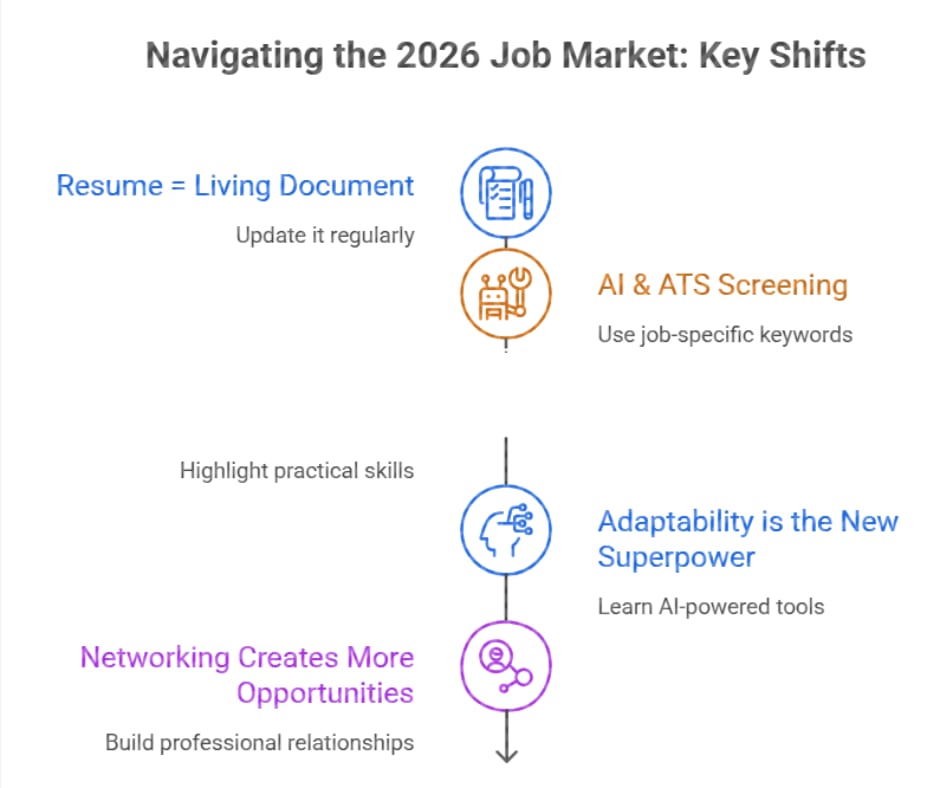
None of these five shifts asks you to reinvent yourself completely. They ask for a bit more intention — a resume that keeps evolving instead of gathering dust, some awareness of how AI reads your application before a human does, the habit of naming your actual skills instead of hiding behind a title, comfort with new tools instead of resistance to them, and relationships built well before you need anything from them. Candidates who approach 2026's job market this way stop just applying and start actually getting picked.