The Real Python Roadmap: Learn It Free, Skip the Course Hoarding, Get Hired
Published on August 26, 2026
Blogs
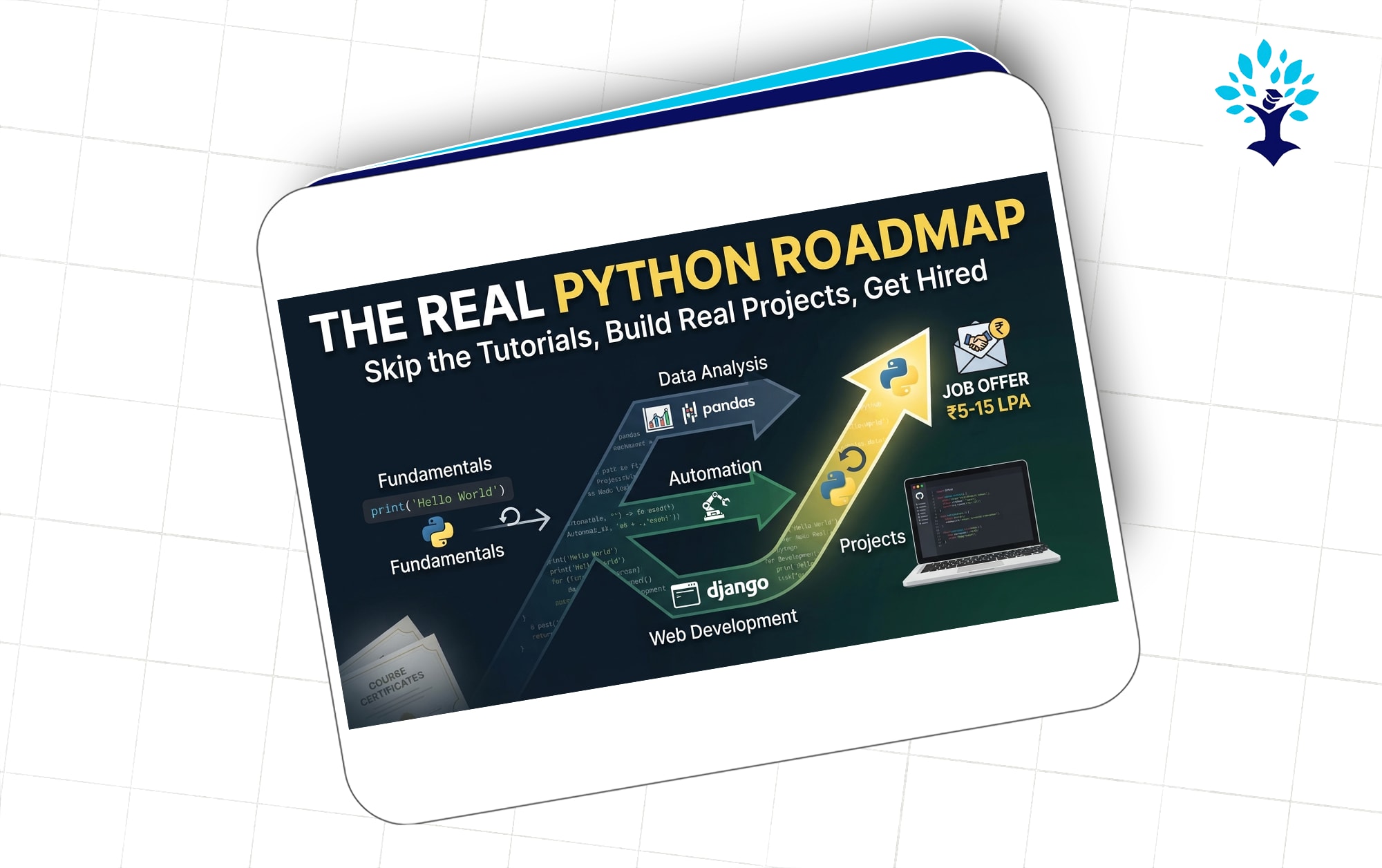
Learn It Free, Skip the Course Hoarding, Get Hired
Everyone knows someone who's been "learning Python" for eight months and still can't build anything beyond a to-do list app from a tutorial. Not because Python is hard — it's genuinely one of the friendlier languages to start with — but because most people learn it the wrong way: hopping between five different free courses, watching hours of videos, and never actually building anything that resembles real work.
This isn't another "50 free Python resources" roundup. It's a straight sequence — what to learn, in what order, what to build along the way, and how to turn that into an actual job offer instead of a collection of half-finished course certificates sitting unused on your resume.
Why Python Specifically Is Worth the Time
Python shows up almost everywhere now — web development, data analysis, automation, machine learning, and even basic scripting for non-technical roles that need someone to speed up a repetitive task. That spread is exactly why it's one of the more flexible skills a beginner can pick up. You're not locking yourself into one narrow career path by learning it; you're opening several at once.
The pay reflects that flexibility too. A fresher with genuine Python skills and a couple of real projects can land data analyst roles around ₹5–8 LPA, automation or QA roles in a similar range, or move toward data science and backend development tracks that climb well past ₹15 LPA with a few years of experience. What makes it particularly good for a beginner is the learning curve — the syntax reads close to plain English, which means you spend less time fighting the language and more time actually solving problems.
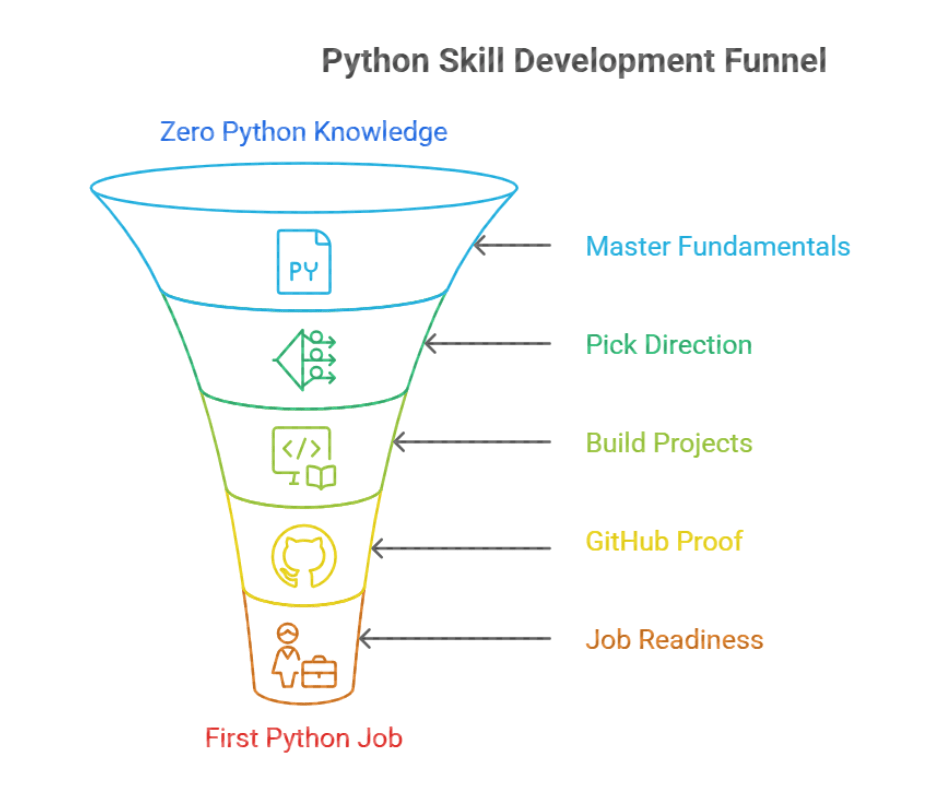
Step One: Learn the Fundamentals Properly, Not Fast
This is the stage most people rush through, and it's exactly why so many self-taught candidates struggle in technical interviews later. Before touching any specialization — data, web, automation — get genuinely comfortable with the basics.
Variables, data types, and basic operations, until writing them feels automatic rather than something you have to look up each time
Loops and conditionals, practiced through small exercises rather than just watching someone else solve them on screen
Functions and how to structure code so it doesn't turn into one giant unreadable block
Basic data structures — lists, dictionaries, sets — since almost every real project depends on using these comfortably
freeCodeCamp's Python course and Google's free Python Class both cover this stage properly without cost, and either one, followed start to finish with the exercises actually completed, builds a solid foundation. The mistake most beginners make here is skipping the practice problems and moving straight to the next video — that's exactly where the gap between "watched a course" and "can actually code" opens up.
Step Two: Pick a Direction Instead of Learning Everything
Python is broad enough that trying to learn all of it at once leads nowhere fast. Once the fundamentals feel solid, pick one direction and go deeper there before circling back to the others.
Data analysis and automation tend to be the friendliest entry points for beginners without a strong math background. Learning pandas for data manipulation and a bit of basic automation scripting opens up data analyst and process automation roles fairly quickly, and neither requires the deeper statistics knowledge that data science eventually demands.
Web development with Python, usually through Django or Flask, suits people who enjoy building things they can actually see and interact with. It's a slightly longer path to job-readiness than pure scripting, but it opens up backend development roles with solid, consistent demand.
Data science and machine learning are the more competitive, longer path, and it's worth being honest about that upfront. It needs a real statistics foundation alongside the Python skills, and rushing into it without that foundation is exactly why so many people stall out here after a few months.
Step Three: Build Real Projects, Not Just Course Exercises
This is the step almost everyone skips, and it's the single biggest reason certified, course-completed candidates still get passed over in interviews. A finished course proves you followed instructions. A real project proves you can think.
Build something that solves an actual problem you personally have, even something small like a script that organizes files on your laptop or tracks your monthly expenses from a spreadsheet
Work with a real, messy public dataset instead of the clean, pre-processed data most tutorials hand you, since real data teaches problems tutorials conveniently avoid
Push everything to GitHub with a short readme explaining what the project does and why you made the choices you made, since recruiters do check this more often than people assume
Break something on purpose and fix it, because debugging under mild pressure is exactly what a lot of technical interviews test for
A candidate with two solid, documented projects on GitHub consistently beats a candidate with five completed courses and nothing built to show for it.
Step Four: Get the First Job, Not the Perfect One
Being job-ready and actually getting hired are two separate problems, and this is where a lot of self-taught candidates lose momentum after months of solid learning.
Apply to junior data analyst, QA automation, or entry-level developer roles first, even if a data scientist title is the eventual goal. These roles hire freshers more readily, ask for less prior experience, and build exactly the kind of credibility that makes the next jump easier. Target smaller companies and startups over large enterprises early on — the interview bar tends to be more practical and less theoretical, and it's often the faster route to actual hands-on experience. Talk through your GitHub projects confidently in every interview, since this usually matters more than the certificate at the top of your resume. Being able to explain your projects clearly can make a bigger difference than simply having them on your resume, especially when you're competing for your first job — learning how to talk your way up can become a real advantage. And don't wait for the "perfect" skill level before applying — most people who land their first Python-related job started applying while still learning, not after declaring themselves fully ready.
A Realistic Timeline, Not a Marketing One
Course platforms love promising job-ready skills in thirty days, and almost nobody actually gets there in that window without prior programming exposure. A more honest timeline looks like four to six weeks on fundamentals, another four to six weeks going deeper into one direction, and a final stretch of four to eight weeks building and polishing two real projects before applying seriously. That's roughly three to four months of consistent, unhurried effort — not a weekend crash course, but genuinely achievable for someone studying an hour or two most days without burning out halfway through.
Final Thought
Python rewards people who build steadily instead of jumping between courses hoping the next one finally clicks. Learn the fundamentals properly, pick one direction instead of trying to master everything at once, build two or three real projects you can actually talk through, and start applying before you feel completely ready. That sequence, followed consistently over three to four months, gets people hired far more often than another six months of collecting free course certificates ever will.