Stop Playing the Numbers Game: A Smarter Way to Land Your Next Job
Published on July 26, 2026
Blogs
A Smarter Way to Land Your Next Job
Here's a scene I've watched play out with more job seekers than I can count. Monday morning, laptop open, coffee going cold. Two straight hours of clicking "Apply Now" on anything that loosely fits the resume. By Friday, the count is somewhere near sixty. There's a weird satisfaction in that number, like you've earned something just by showing up and clicking a lot. Then the week ends, and what's waiting in the inbox is two rejection emails and forty-odd applications that went absolutely nowhere.
If that sounds like your last few weeks, you're not doing anything wrong exactly. You're doing what almost everyone does. More applications feel like it should mean better odds — it's a comforting kind of math. Except it isn't math that holds up. And the hours you're spending clicking "Apply" a hundred times a week could be doing something far more useful for you.
So let's get into why the volume approach keeps failing, and what tends to work instead.
Why Applying Everywhere Doesn't Get You Anywhere
A single job posting on Naukri or LinkedIn can pull in 300, sometimes 500 applications, within two or three days. Think about that for a second — what is one recruiter realistically going to do with 400 resumes sitting in a folder? They're not opening each one and reading it start to finish. Most mid-sized and large companies run software called an Applicant Tracking System before a human even glances at your file. It scans for keywords, formatting, job title matches, all of it, before deciding whether your resume is even worth a human's ten seconds.
That's the part people miss. A resume that isn't written for the specific job doesn't get skipped by some tired HR person at 11 pm because a human never looks at it at 11 pm. It gets filtered out by a machine before your name ever registers with anyone. That's where most of the silence comes from.
A few more reasons the copy-paste method works against you:
Your resume probably says "customer handling" when the job description wants "client relationship management." Same skill, different words — and the ATS often can't connect them. So a perfectly qualified candidate gets ranked lower than someone who used the right phrasing.
Cover letters that could be sent to any company on earth are painfully obvious to a recruiter within the first two lines. And when there's a candidate on the other side of that stack who named the company and mentioned something specific about the role, guess who gets picked.
There's also just... burnout. Nobody talks about this enough. Firing off application after application drains you in a way that's hard to notice until you're three weeks in and running on nothing. By the time you get to the two or three companies you cared about most, you've got no energy left to make those applications good.
What Actually Works Instead
Make a list of companies, not just job titles. Before you open a single portal, sit down and write out twenty or thirty companies you'd genuinely want to work for. Not some fantasy list — realistic ones, based on your skills, your city, the kind of work culture that suits you. Check their careers pages directly, every week if you can. A lot of roles show up there before they ever hit an aggregator site.
Tailor without rewriting from scratch every time. You don't need a brand-new resume for every single application — nobody has that kind of time. Keep one solid master resume with everything you've ever done on it, every project, every number you can point to. Then, for each role that's worth the effort, pull the exact wording from the posting and work it into your resume's skills section and bullets. This one habit alone gets more people past the filter than almost anything else on this list.
A couple of things worth doing every single time you tailor:
Use the job title language from the posting itself, even if it's slightly different from what your last company called you
Move your strongest, most relevant bullet point to the top instead of just listing your work in chronological order
Swap vague lines for actual numbers — "handled customer queries" tells a recruiter nothing, but "resolved 40+ queries a day with a 95% satisfaction score" tells them everything
Go after the roles nobody's posting. This is the part almost nobody does. A big chunk of hiring — some studies put it near 70% — happens through referrals and internal networks, long before a job is ever advertised publicly. Two candidates can have near-identical resumes and land in completely different places, purely because one of them only applies to what's listed online while the other is talking to people who already work there.
You don't need to make this weird or overly formal. A short, respectful message to someone at a company you're targeting — asking what their experience there has been like, or if they know of anything opening up — works more often than you'd think. Most people are willing to help. Just don't lead with "can you refer me" in the first line. Nobody likes that. Many companies fill vacancies through referrals, internal hiring, and professional networks before they ever appear on job portals. Understanding the hidden job market can help you discover opportunities that aren't publicly advertised and improve your chances of landing interviews.
Follow up. Almost nobody does. If it's been a week or ten days and you've heard nothing back, send a short follow-up email. It's a small thing, and it puts your name back in front of someone at exactly the moment the pile has thinned out a bit. Most people skip this step entirely, which is exactly why it works.
Track it, even if it feels unnecessary. A basic spreadsheet — company, role, date applied, who you spoke to, current status — saves you more headaches than you'd expect. When you're applying to ten roles a week instead of forty, this takes five minutes to maintain, and it means you never miss a follow-up or repeat a mistake you already made once.
So, How Many Applications Should You Send?
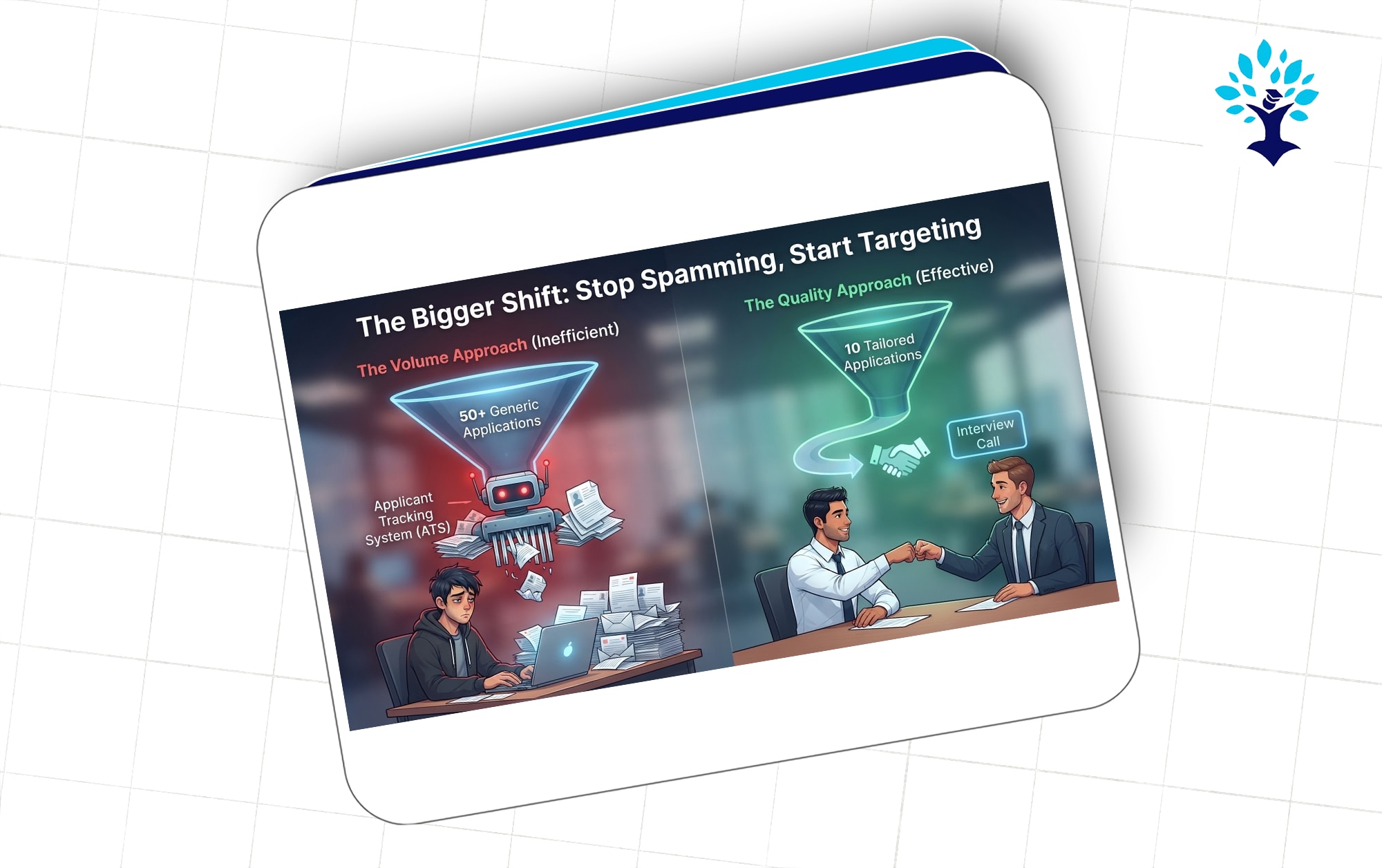
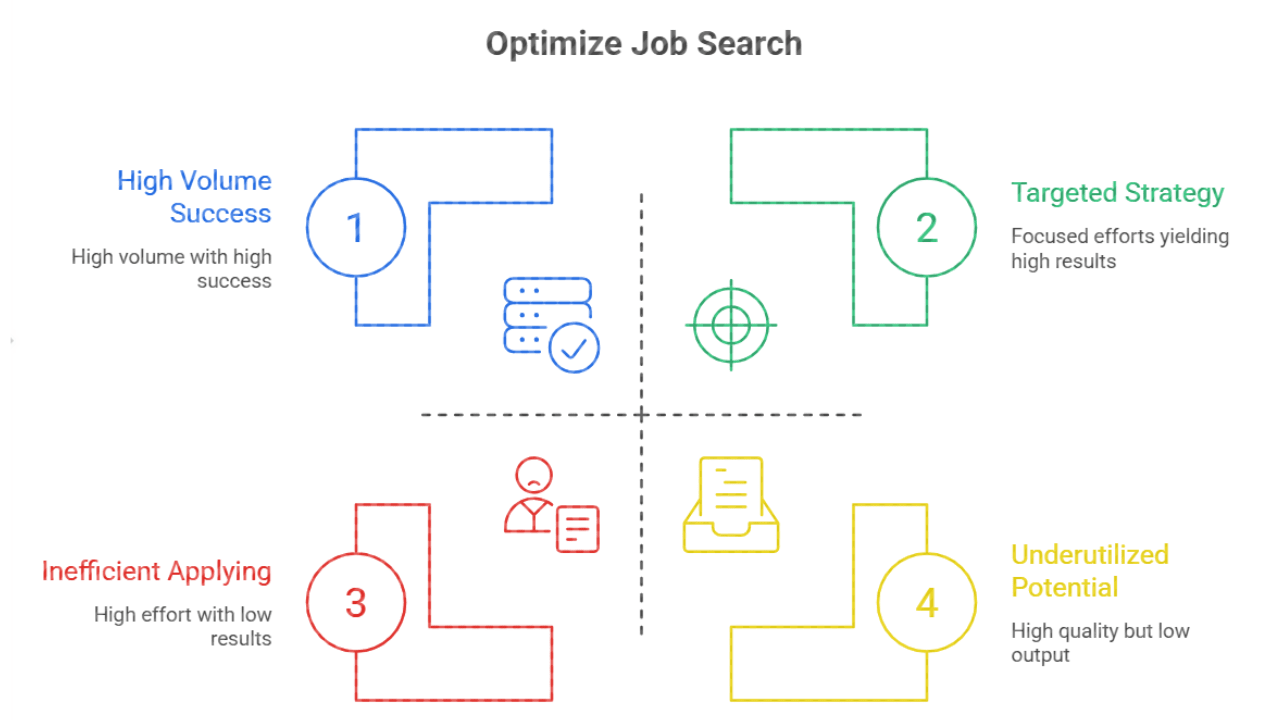
There's no perfect number that works for every person and every industry. But a pattern shows up again and again with job seekers who land interviews faster: five to ten well-tailored applications a week beats twenty or thirty generic ones, almost every time. This isn't about slowing your search down for the sake of it. It's about putting your energy where it has a real shot at working.
A workable week might look something like this — a couple of days researching roles that fit well, a couple of days tailoring your resume and outreach for your shortlist, and at least one day set aside just for messaging people and following up on what you've already sent. It's not exciting work. But it's sustainable, and sustainable is what gets you through a search that can easily stretch on for months.
The Bigger Shift
Job hunting isn't a lottery where buying more tickets improves your chances. It works more like sales — a handful of well-qualified leads beats a huge pile of cold, uninterested ones, every time. Every hour you save by not mass applying is an hour you can spend making your resume sharper, your LinkedIn worth looking at, or your outreach message specific enough that someone bothers to read past the first line.
Rejections start to feel personal somewhere around application fifteen or twenty. Most of the time, it isn't. Its relevance. It's whether your application shows a recruiter that you get the specific role in front of them, instead of just being someone who wants a job, any job, as fast as possible.
Final Thought
The job market has changed, and blasting your resume at every listing you can find just doesn't deliver the way it used to, if it ever really did. Slowing down enough to research, tailor, and reach out feels backwards when you're anxious to land something quickly — but it's the version of the search that turns into interviews. Fewer companies, more effort behind each one. Let quality do what quantity never could.