The Job Market Nobody Shows You: Why 70-80% of Openings Never Reach Naukri or Indeed
Published on July 26, 2026
Blogs
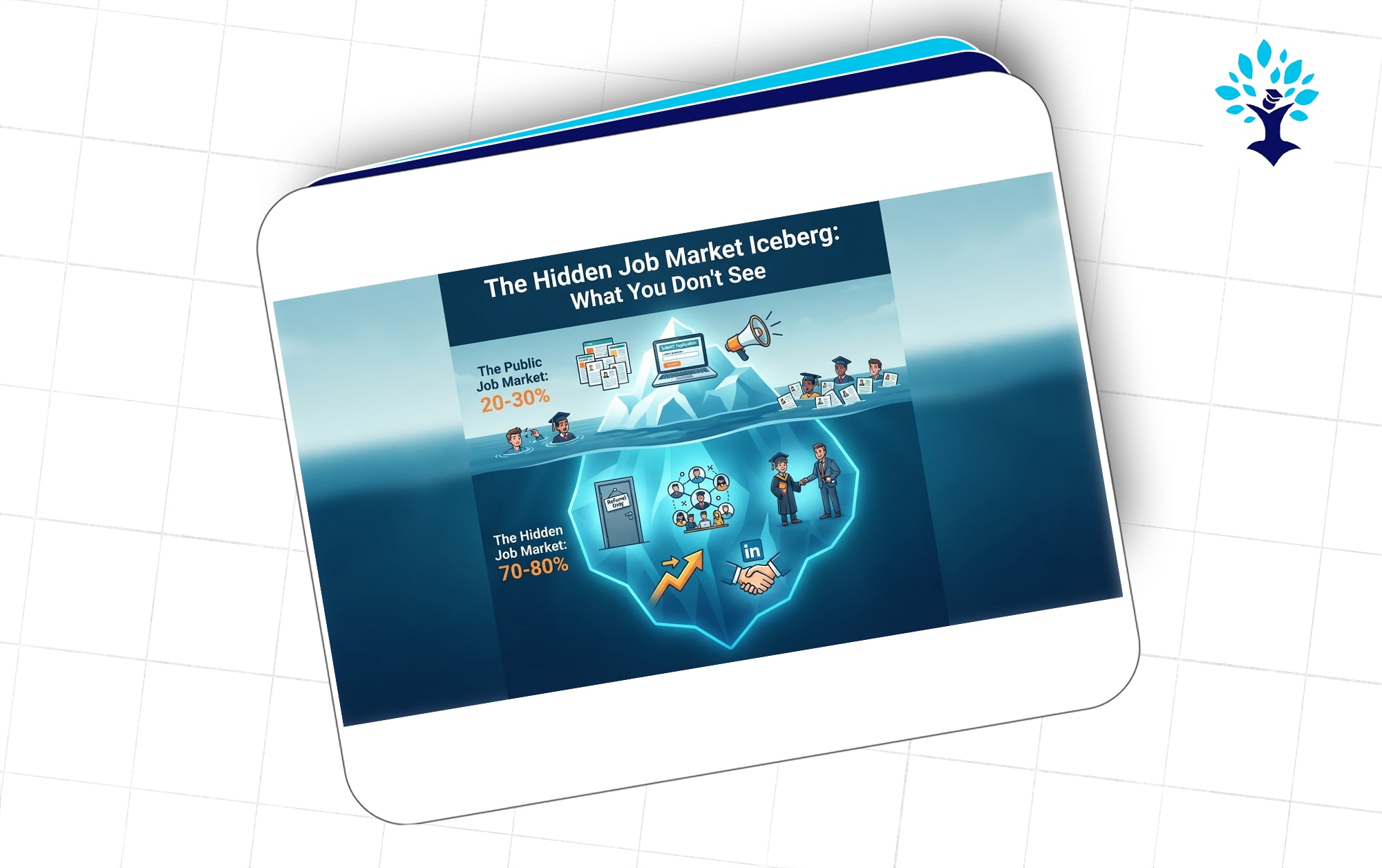
The Job Market Nobody Shows You
Refresh Naukri for the fifteenth time today. Twenty applications this week. Zero calls back. Then your college WhatsApp group lights up — someone got hired at a company that never even ran a job ad for the role. No portal listing. No LinkedIn post. Nothing you could have applied to even if you tried.
That's not luck. That's the hidden job market. And most job seekers spend months banging their heads against portals without ever knowing this second, much bigger market exists right next to it.
Here's the thing nobody tells freshers: job portals are not the job market. They're a small, crowded corner of it. The rest happens through people — conversations, referrals, a senior forwarding your resume because you happened to message them at the right time.
What "Hidden Job Market" Really Means (No, It's Not a Conspiracy)
The hidden job market is every role that gets filled without ever touching a public job board, career page, or newspaper classified. Referrals close it. Internal promotions close it. A recruiter's existing database closes it. Someone's cousin who "knows a guy" closes it.
HR industry data has said the same thing for years, in study after study: somewhere between 70% and 80% of jobs get filled through networking and direct outreach, not public postings. Companies aren't doing this to keep you out. They're doing it because posting publicly is slow, costs money, and drowns HR in resumes from people who don't even meet the basic criteria. A referral skips all of that.
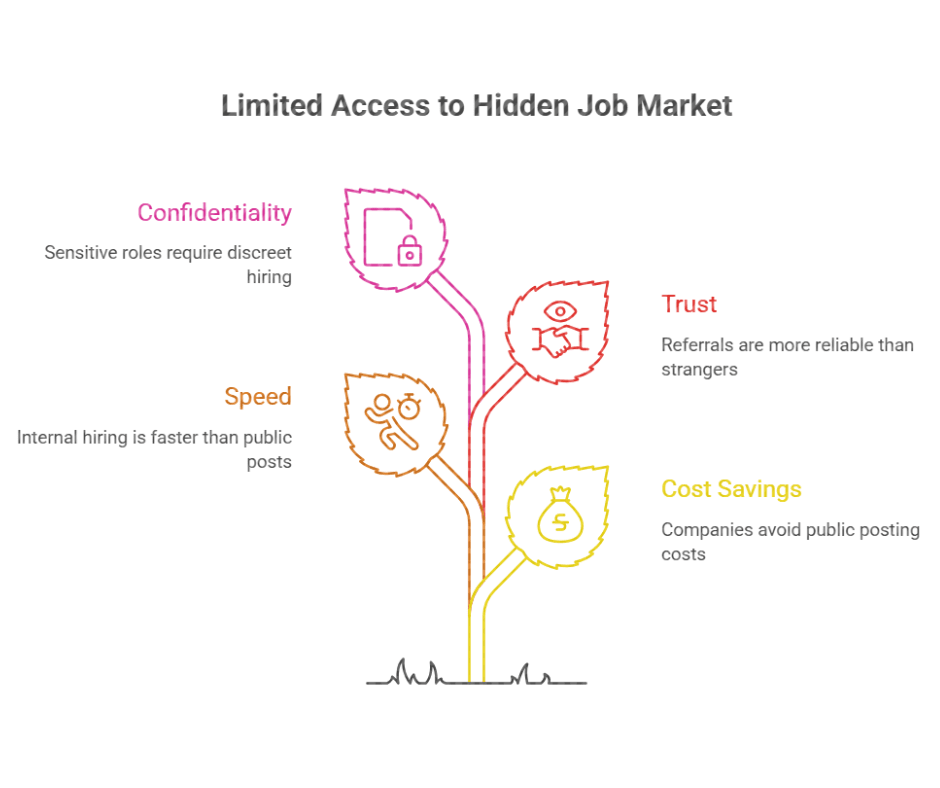
Why Companies Would Rather Not Post the Job at All
Flip the lens for a second and look at it from the employer's side, because that's where the real explanation sits:
Posting costs money and time. Premium job listings aren't free, and someone still has to sift through hundreds of applications afterward
A referral is a built-in background check. If your employee vouches for someone, the risk of a bad hire drops instantly — no interview panel can replicate that trust
Speed matters more than people admit. A known candidate can start next week. A public posting might not even get a decent shortlist for a month
Some roles just can't go public. Restructuring, senior exits, expansion plans — companies don't want competitors or clients reading the tea leaves off a job board
None of this is a secret HR club plotting against you. It's just how businesses operate, and once you get that, the whole "why am I not getting calls" mystery starts making a lot more sense.
So, How Do You Get Into This Market?
This is where most career advice turns useless. "Network more" — okay, but how, exactly? Nobody explains the mechanics. So here's the version that works:
Pick 20-30 companies you truly want to work at. Not the ones you're applying to out of desperation — the ones you'd be excited to join
Find real employees there on LinkedIn and message them something specific. Not "Sir, please, job dedo" — ask about their role, their team, what a typical week looks like for them
Message your college seniors. Alumni respond to alumni. It's just human nature — there's an automatic trust layer there that a stranger doesn't get
Show up to meetups and webinars, even the ones that feel loosely related to your field. Half of what happens there is not the content — it's who's sitting next to you
Ask for a 15-minute conversation about someone's career, not a job. People say yes to curiosity far more than they say yes to job requests
If a recruiter rejected you once, don't disappear. Follow up politely three months later. Recruiters remember candidates who didn't burn the bridge
Portals still matter. Keep applying. But if that's your only strategy, you're fighting for a fraction of the pie while ignoring the rest of it sitting untouched.
Freshers, Stop Assuming Referrals Aren't For You
There's a myth floating around that referrals are only for people with five years of experience and a fat LinkedIn network. Wrong. At the entry level, referrals often work better because the person referring to you isn't risking much. Nobody's career gets ruined over a fresher hire that doesn't work out.
That means even a weak connection is worth chasing — a senior from your batch, a distant relative in the industry, that one person you met for two minutes at a career fair. Most people forward resumes internally far more readily than job seekers expect, mostly because it costs them nothing, and sometimes it earns them a referral bonus on top.
Make Yourself Findable, Not Just Available
Half the game isn't reaching out — it's being visible enough that recruiters find you first. HR teams search LinkedIn and similar platforms constantly, long before they ever open a job portal.
Ditch the generic "Seeking Opportunities" headline. Say what role you want, plainly
Post once in a while about a project, a skill you picked up, or something in your field — this compounds over months, not days
Join niche LinkedIn or WhatsApp groups tied to your industry. Openings often surface there before they hit a public portal at all
Keep your resume and profile telling the same story, because the moment someone checks you out after a referral, mismatches get noticed fast
When a recruiter or employee checks your profile after a referral, your resume is often the first document they review. Using Free Resume Templates that are ATS-friendly and professionally formatted can help ensure your application makes a strong first impression instead of getting filtered out.
A Weekly Routine That Moves the Needle
Networking dies for most people because it feels vague — no deadline, no scoreboard. Give it structure, and it stops feeling pointless:
20-30 minutes a week, finding 3-5 new people to connect with at your target companies
Two or three real, personalized messages a day, not mass connection spam
One evening a week set aside for a webinar, meetup, or virtual event
A follow-up check on anyone who went quiet after your last message
A basic spreadsheet tracking who you spoke to, when, and what's next
Unglamorous, yes. But ten real conversations a month is well over a hundred touchpoints across a year — and even a modest referral conversion rate out of that pool beats the silence most people get from mass portal applications.
Real Takeaway
Job portals aren't a waste of time, but they're just one door into a market that mostly moves through people, not postings. Keep applying online if you want — just stop expecting it to be enough on its own. Build the habit of reaching out, showing up, and staying visible, and the calls will eventually start coming from places you never technically applied to at all.