After the Interview Ends: The Follow-Up Rules That Decide Close Calls
Published on August 01, 2026
Blogs
The Follow-Up Rules That Decide Close Calls
You walk out of the interview room, or you close the laptop after a video call, and there's this weird gap where nobody tells you what to do. Some people go completely silent and wait. Others panic a little and send two or three messages within a week. Both end up hurting candidates more than they realize, and neither one is necessary once you know roughly what recruiters expect during this stretch.
This isn't some soft add-on to the "real" work of interviewing well. It's part of the process. Recruiters often end up choosing between two evenly matched candidates more frequently than people assume, and the follow-up is frequently what tips the decision: who sent it, how they wrote it, whether it added value or just cluttered an already full inbox. If you've left an interview wondering whether to email, when, and what to even say that doesn't sound needy or robotic, here's the breakdown.
Why It Matters More Than Most Candidates Think
Interviewers are usually running recruitment on top of their actual job. To you, this role might be the most important thing happening this month. To them, it's one task in a list that never really ends. A good follow-up does a couple of things at once. It puts your name back in front of someone who has a dozen other things pulling at their attention that day. It shows you can write a clean, professional message, which matters more than candidates think. And when two people are truly close on skill and fit, it can be the small thing that breaks the tie.
Recruiters have said this outright in interviews of their own — when it's a toss-up between candidates, a specific, well-timed thank-you note is sometimes the deciding factor. That's not a promise; it'll change the outcome every time. It just costs you almost nothing to send, so skipping it means giving away an easy edge for free.
The First Day Matters Most
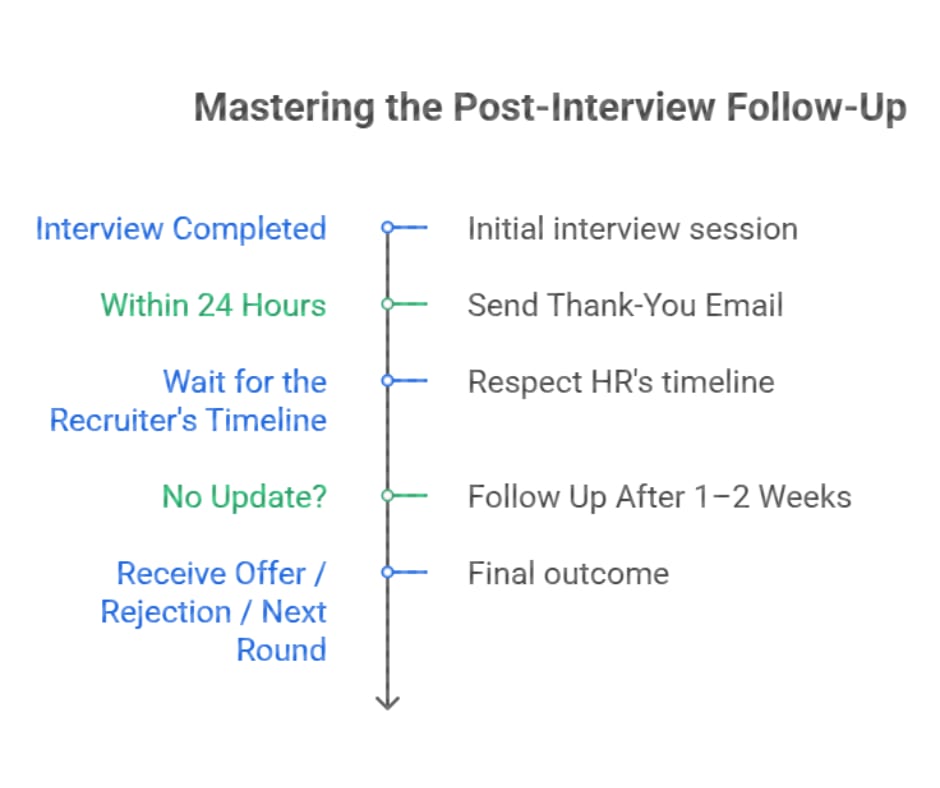
Timing counts for more here than people give it credit for. Some hiring panels log feedback or meet right after a final round, which means your note landing while they're still forming an opinion carries real weight, not just politeness points scored after the fact. Send the thank-you within 24 hours, and ideally the same day if you can manage it. The conversation is still fresh for everyone at that point. If you spoke with more than one person, write to each of them separately. A copied group message is easy to spot, especially if two interviewers happen to compare notes afterward. Keep it short. One paragraph is plenty. This isn't the moment to walk through your whole resume again.
What makes a follow-up land is specificity. "Thank you for your time" could have come from anyone. Bring up something particular — a project they mentioned, a challenge they described, a comment that stuck with you. It shows you were listening in the room, not just performing politeness afterward. Close with a line reiterating your interest, but keep it simple. You don't need to oversell it. If you want a rough shape to follow: thank them for the time and for walking you through the role, mention one specific thing from the conversation, connect it briefly to something in your own background, and end by saying you're looking forward to hearing what's next.
Waiting to Hear Back
Silence after an interview is uncomfortable. Every day that passes without a reply feels like it means something, and usually it doesn't. There's a right way to check in, and it's not the same as chasing someone down.
If they gave you a timeline, respect it. Told you a week? Don't email on day three. If nobody gave you a timeline at all, one to two weeks out is a reasonable window to send a short check-in — confirm you're still interested, ask if there's an update, and try to sound patient even if you're not feeling it. One follow-up is normal. Three inside a week starts to read as pressure rather than enthusiasm, and it can work against you in ways you won't ever be told about directly.
One more thing worth knowing: if a competing offer lands while you're waiting, tell the company. This is expected, not pushy, whether or not you end up taking the other offer. One more thing worth knowing: if a (Competing offer) lands while you're waiting, tell the company. This is expected, not pushy, whether or not you end up taking the other offer. And if that situation puts you in a position to negotiate, knowing how to approach the conversation can make a meaningful difference.
Second and Final Rounds Feel a Bit Different
By the time you've made it past round one, you've probably met people you'd work with day to day, so the follow-up can be a little warmer and more specific than it was the first time. The basic rules don't change, though — separate notes, specific references, nothing too long. If anything, this is where people tend to overdo it, because the stakes feel closer and the temptation to send more than one message gets stronger. Resist it.
If It's a No
A rejection stings, no way around that. But how you handle the next few minutes matters more than people expect.
A short, gracious reply thanking them keeps the door open for something down the line — recruiters remember who took a "no" well and who didn't.
It's fine to ask, politely, whether they'd share any feedback. Most won't, some will, and either way it costs you nothing to ask.
Don't sit with it longer than it deserves. Every interview teaches you something for the next one, even the ones that go nowhere.
If the role felt like a good fit, ask to stay on their radar for future openings. Costs nothing, and sometimes it leads somewhere months later.
A Few Small Things People Get Wrong
Keep the job title in your subject line if you're starting a fresh thread. It makes it easier for a recruiter juggling a dozen open roles to place your message fast. If you can reply within the same email thread instead, do that; it keeps the context intact on their end.
Match their energy. If the interview felt formal, keep the note formal. If it was relaxed and easy, a stiff, overly corporate thank-you can feel oddly out of place. And proofread before you hit send. A typo-filled follow-up undercuts the entire point of sending one, which is to show a bit of polish.
Mistakes Worth Avoiding
One mass thank-you to several interviewers instead of individual notes
Waiting past 48 hours for the first message, letting the moment go cold
Writing something so long that it reads like a second cover letter
Following up too often, which reads as anxious rather than interested
Leaving the job title out of the subject line
Getting the tone wrong — too casual for a formal interviewer, too stiff for a relaxed one
Final Thought
Nobody gets hired purely because of a good follow-up email, but plenty of close calls get decided by one. It's a small step that signals exactly the kind of professionalism employers are trying to screen for in the first place: timely, specific, not overdone. Send the thank-you within a day, hold off on checking in again until the timeline has fully passed, and even a rejection deserves the same grace you'd want to be shown yourself. The interview ends the moment you walk out or close the laptop. How you show up right after doesn't.