Salary Negotiation in India: What to Say After the Offer Lands, Not Before
Published on August 01, 2026
Blogs

What to Say After the Offer Lands, Not Before
Most candidates in India accept the first number they hear. Not because it's fair, but because negotiating feels like it might cost them the offer entirely. That fear is understandable, and it's also mostly wrong. Recruiters expect a counter. HR budgets almost always carry room built in for exactly this conversation. And yet only a small share of candidates ever push back, which means the ones who do walk away with meaningfully better packages than the people sitting next to them on day one.
This isn't about being aggressive or memorizing a script that sounds like it belongs in a corporate training video. It's about knowing when to speak up, what to ask for, and how to do it without putting the offer at risk. Whether you're a fresher with your first offer letter or a few years in and switching companies, the approach below works across both.
Why Most Candidates Leave Money on the Table
A large share of Indian professionals accept the first offer without countering at all. The ones who do negotiate get at least part of what they asked for far more often than not — the math clearly favours asking. So why doesn't everyone do it?
Fear of seeming greedy or ungrateful for getting an offer in the first place
Not knowing what the role pays elsewhere, so there's nothing to anchor a counter to
Confusing negotiation with confrontation, when it's really just a conversation about value
Worrying that HR will pull the offer entirely, which happens far less often than candidates assume
Not knowing what parts of an offer are even negotiable beyond the base number
Understanding these blocks matters because most of them dissolve the moment you're prepared with actual data instead of guesswork.
Before You Say a Number: Do the Homework
Walking into a negotiation without market data is the single biggest reason offers don't move. HR expects you to have done some research — showing up empty-handed just makes their job easier.
Check what the role really pays. Platforms like AmbitionBox, Glassdoor India, Naukri Salary Insights, and LinkedIn give you a realistic band for your role, experience level, and city — use two or three sources, not just one.
Factor in your city. The same CTC stretches very differently in Bengaluru versus a tier-2 city, and companies with multiple office locations sometimes have room to adjust based on where you're based.
Understand your CTC breakdown before comparing numbers. A ₹6 lakh CTC doesn't mean ₹50,000 a month in hand — once you subtract PF, gratuity, insurance, and tax, the real number is closer to ₹32,000–38,000. Compare offers on take-home, not headline CTC.
Know your leverage, and be honest about how much you have. A competing offer, a specific technical skill, relevant internship outcomes, or a certification the role explicitly asks for all count. "My friend got more at another company" does not.
Never lead with a number if you can avoid it. Let HR share the budget range first. Once you've stated a figure, that becomes your ceiling in their head, even if you lowballed yourself out of nerves.
What's Really Negotiable Beyond Base Pay
Most candidates fixate entirely on the base number and stop the conversation there. That's a mistake, because plenty of value sits elsewhere in the offer and companies are often more flexible on these than on CTC itself.
Joining bonus, especially if you can commit to a shorter notice period — some firms pay a real premium for candidates who can join within 30 days instead of 90
A guaranteed review at six months instead of the standard twelve, so a strong performance gets rewarded sooner
Variable pay structure and how much of it is realistic to hit, not just the number printed on paper
Remote or hybrid flexibility, which has real value even when it doesn't show up in the CTC figure
Preferred location, particularly if the company has offices in more than one city
Learning budgets, certifications, or ESOPs, depending on the kind of role and company
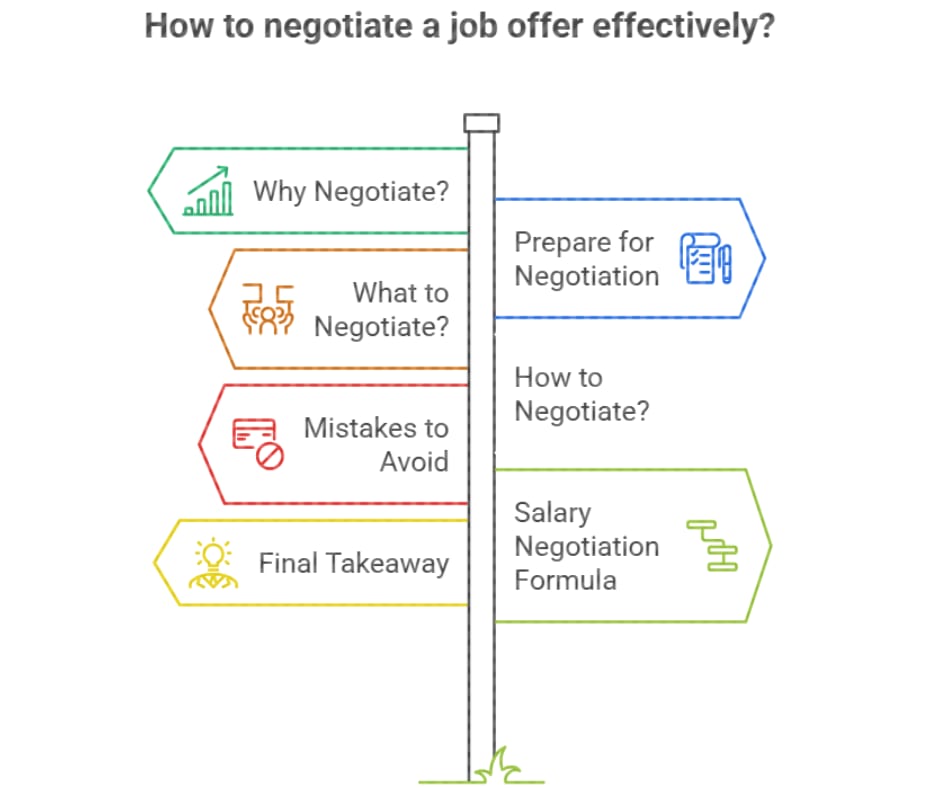
How to Have the Conversation
Wait for the written offer before you start negotiating anything. A verbal number isn't something you can push back on cleanly.
Ask for a day or two if you need time to think it through — this is a completely normal request, even when HR asks for a quick response.
Counter with a specific, researched number rather than a vague "can you do a bit more." A range 10–20% above the initial offer is realistic for most mid-level roles; freshers should generally aim closer to 5–10%, unless a strong competing offer changes the math.
Keep the tone collaborative, not transactional. Something like "I'm looking forward to this role, and based on my research into market rates for similar positions, I was hoping we could look at [number]" lands very differently than a flat demand. Strong communication matters here just as much as the number you ask for. If you're preparing for interviews and want to build the confidence to express your point clearly under pressure, check out our guide to (Group Discussion Rounds in 2026).
If there's a competing offer, mention it specifically and respectfully — a real number from a real company carries far more weight than a vague reference to "other opportunities."
If HR says the budget is fixed, don't stop there. Ask about the non-salary levers instead: an early review, a joining bonus, flexible work arrangements.
Get everything in writing before you resign from your current job. A verbal promise about a review or bonus means nothing once you've already handed in notice elsewhere.
Mistakes That Can Cost You the Extra Offer
Naming a number before HR shares their budget range
Anchoring your ask to your current salary instead of what the market pays for the role
Bringing personal expenses into the conversation as a justification — it isn't a business case, and HR won't treat it like one
Being aggressive or ultimatum-heavy, which tends to backfire hardest for freshers with limited leverage
Accepting a verbal commitment on a review or bonus without asking for it in writing
Final Thought
Salary negotiation in India has stopped being an awkward, optional step and become something HR routinely expects from candidates who've done their homework. The gap between someone who negotiates and someone who doesn't often runs into lakhs over the first few years alone, because that first number sets the baseline for every raise that follows. You don't need to be pushy to ask for what the market says you're worth. You just need the data, a calm tone, and the willingness to have the conversation instead of accepting the first number out of fear that asking will cost you the offer. It rarely does.