The Free Courses Recruiters Actually Recognize (Not the Random Udemy Ones)
Published on August 08, 2026
Blogs
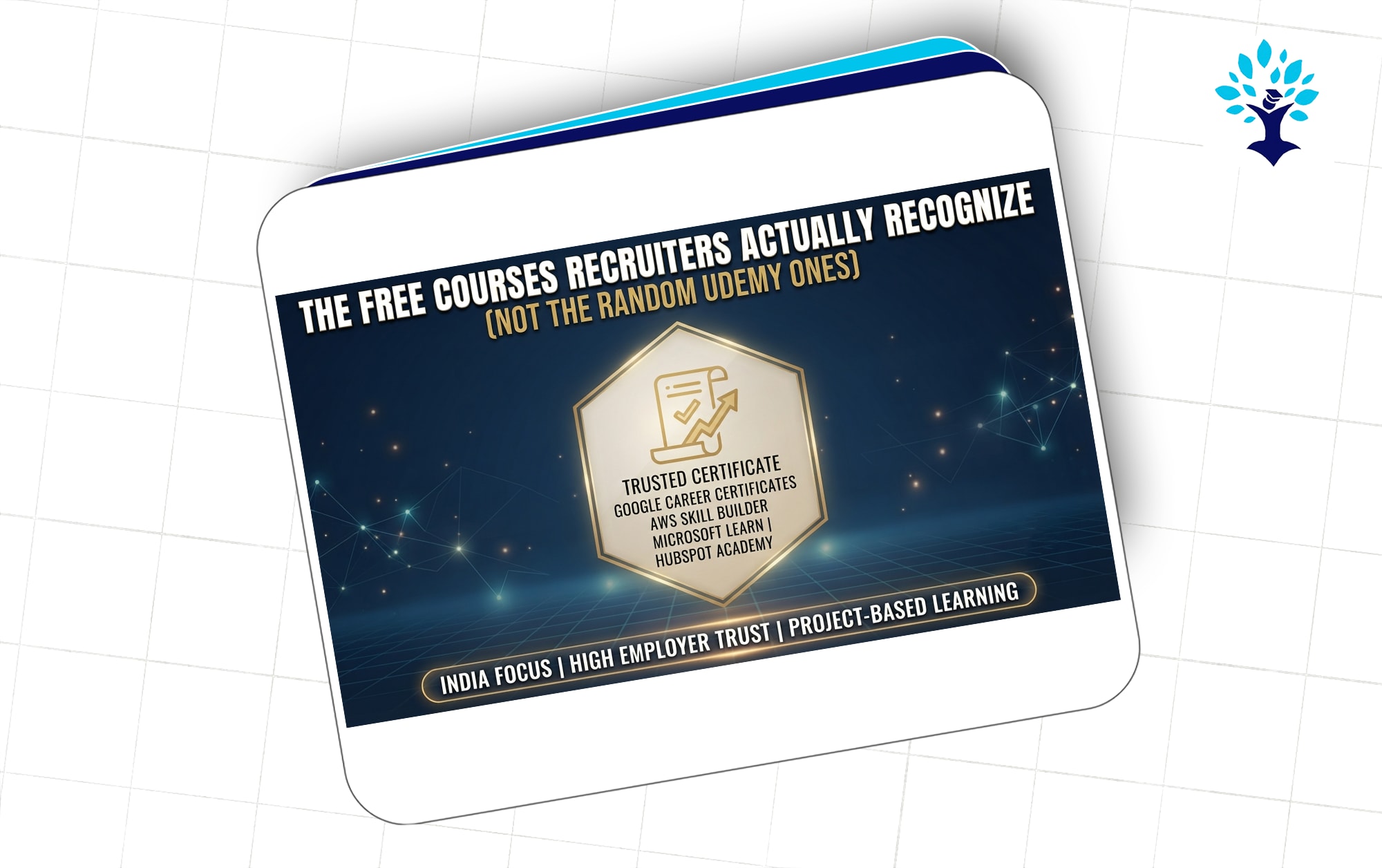
The Free Courses Recruiters Actually Recognize
Free courses have a trust problem, and most job seekers figure that out the hard way. You spend three weeks finishing something, proudly add it to your resume, and the recruiter skims past it like it wasn't even there. Not because you didn't learn anything, but because half the free courses flooding the internet carry zero weight with the people actually making hiring decisions.
Here's the thing nobody tells beginners clearly enough: free doesn't mean worthless, and paid doesn't automatically mean respected. What matters is who's issuing the certificate and whether recruiters have actually seen it enough times to trust it. This list sticks strictly to that filter — free courses that show up in real interviews, get nodded at instead of ignored, and genuinely move a resume forward.
Why Some Free Certificates Work and Most Don't
Recruiters see hundreds of resumes with course names they don't recognize, and there's no time to research each one during a first screening. What gets noticed is a name they've seen before — either because the issuing company is well known, or because enough candidates have come through with that same certificate and performed well on the job.
That's really the whole filter. Google, Microsoft, IBM, HubSpot, and Meta certificates work because these companies have built enough of a reputation that a recruiter trusts the certificate means something, even without checking. A random platform nobody's heard of, no matter how well-produced the course content is, doesn't carry that same instant trust — and rebuilding that trust one recruiter at a time isn't a fight worth having when better options exist for free.
Tech and Data Skills
Google Career Certificates (audit option) — Google offers certificates in IT support, data analytics, UX design, and project management. The paid version comes with graded assignments and a shareable certificate, but even auditing the course content on Coursera for free teaches the actual skill, and several of these certificates directly prepare you for entry-level roles that Google's own hiring partners recognize.
AWS Skill Builder — Amazon's own free training platform for AWS services, and this one matters a lot if cloud computing is on your radar. If you're serious about turning that cloud learning into an actual career, this [From Zero to Cloud Job] is a useful next step after building the fundamentals. It's completely free, built by the company whose services you'd actually be certified on later, and recruiters in cloud-hiring companies recognize it instantly because it's the source, not a third-party interpretation.
Microsoft Learn — Free, self-paced, and built directly by Microsoft for Azure, Power BI, and various Microsoft 365 tools. Because it's free, self-hosted, and constantly updated, it's become one of the more respected free learning paths for anyone targeting cloud or data roles in enterprise-heavy companies.
freeCodeCamp — Completely free coding curriculum covering web development, data analysis with Python, and more. It doesn't carry a corporate brand name behind it, but it's respected in developer hiring circles specifically because completing it usually means you've built real projects, not just watched videos.
Marketing, Business, and Analytics Skills
HubSpot Academy — Free certifications in content marketing, inbound marketing, social media, and email marketing, widely recognized across marketing hiring in India because so many marketing teams actually use HubSpot's tools daily
Google Analytics Certification (Skillshop) — Genuinely free, genuinely respected, and one of the fastest ways to add a real, verifiable skill to a marketing resume in under a week
Meta Blueprint Certifications — Free courses covering Facebook and Instagram ads, useful specifically for anyone targeting digital marketing or social media roles where paid ad platforms are part of the daily job
IBM SkillsBuild — Free courses spanning data analytics, AI fundamentals, and cybersecurity basics, with IBM's name carrying real weight for candidates targeting corporate and enterprise-side roles
The Ones Worth Skipping, No Matter How Popular They Look
Not every widely advertised free course deserves a spot on a resume, and it's worth being direct about which ones to leave off.
Generic "Complete X Bootcamp" style free courses from unknown platforms rarely add value beyond the personal learning itself — recruiters don't recognize the name, and listing five of them back to back can actually look like resume padding rather than real skill-building. The same goes for certificates from platforms whose entire business model is issuing certificates with no assessment behind them; anyone who's screened resumes for more than a few months learns to spot these quickly, and it can quietly work against you rather than for you.
How to Actually Use a Free Certificate on Your Resume
Finishing the course is only half the job. A lot of people undersell a genuinely good certificate by listing it badly.
Don't just paste the certificate name — add one line underneath describing what you actually built or learned, since the name alone means little to someone scanning fast
Pair the certificate with a real project wherever possible, since a Google Data Analytics certificate paired with an actual dashboard you built carries far more weight than the certificate sitting alone
Keep the list short and relevant rather than listing every free course you've ever started, since a resume with fifteen scattered certificates reads as unfocused rather than impressive
Mention the certificate naturally in interviews when relevant, walking through what you learned rather than just stating that you completed it
HR, Project Management, and General Career Skills
Cloud and marketing tend to dominate these lists, but plenty of solid free options exist outside those two lanes as well, and they're worth knowing about if your target role sits elsewhere.
Google Project Management Certificate (audit option) covers the fundamentals of agile and traditional project management, and auditing it for free still teaches frameworks that show up in interviews for coordinator and junior PM roles across industries. LinkedIn Learning's free trial courses carry decent weight too, mainly because the platform is owned by LinkedIn itself, and completed courses show up directly on your profile, where recruiters are already looking. And for anyone eyeing HR or people operations, SHRM's free introductory resources and IBM SkillsBuild's HR-adjacent modules cover hiring fundamentals, workplace policy basics, and people analytics concepts that rarely get taught anywhere else for free.
A quieter option worth mentioning: many state and central government portals in India, including Skill India and NASSCOM FutureSkills Prime, offer free courses in digital skills, data, and cloud fundamentals. These don't carry the instant brand recognition of a Google or Microsoft certificate, but they're increasingly accepted for government and PSU-adjacent roles, and they're worth checking if that's a track you're considering.
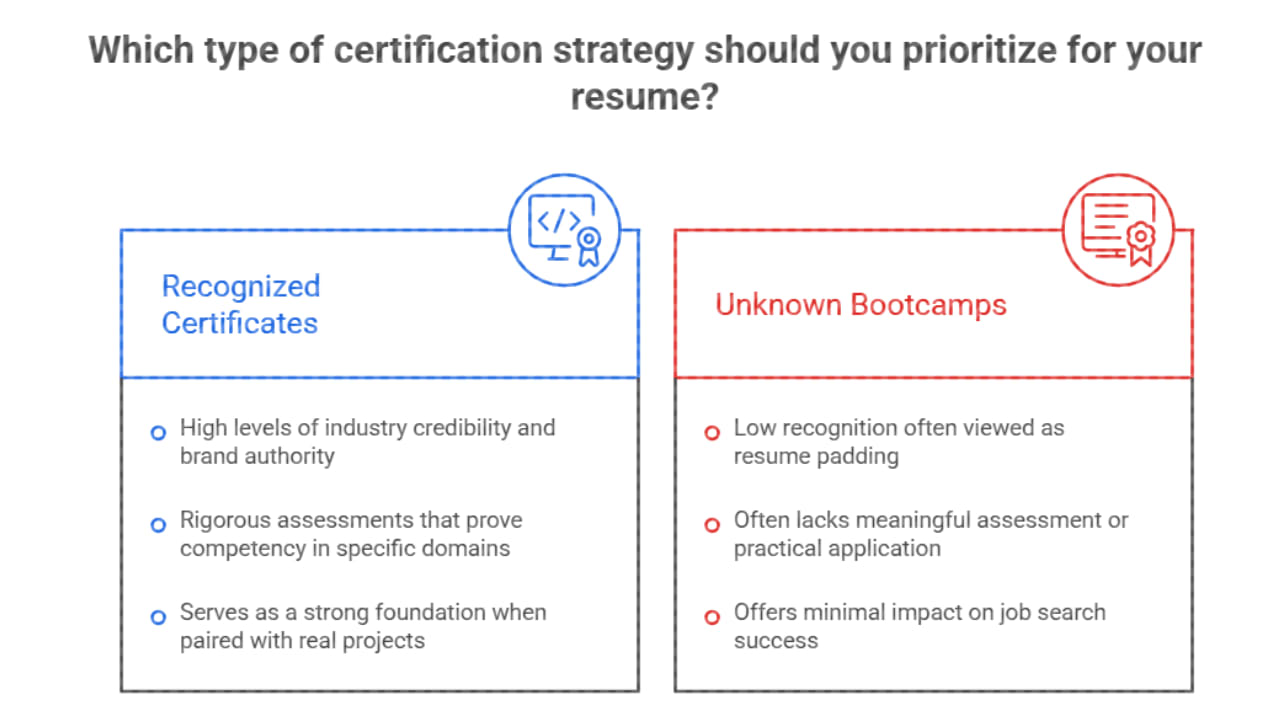
One Certificate Rarely Gets You Hired Alone
It's worth setting expectations honestly here. No single free certificate, however well-recognized, tends to get someone hired entirely on its own. What actually happens in practice is that the certificate gets your resume past the first filter, and the interview still comes down to whether you can talk through what you learned with any real depth. Candidates who treat the certificate as the finish line rather than the starting point usually stall out at that stage, regardless of how respected the issuing brand is.
This is exactly why pairing a certificate with a small, real project matters more than most people admit. It's the difference between saying "I completed Google's Data Analytics course" and being able to say "I completed it and then used what I learned to build a dashboard tracking my college's event attendance data." The second version gets remembered. The first one blends into every other resume in the pile.
Final Thought
The free courses that actually move a hiring decision are the ones issued by names recruiters already trust, paired with something real you built using what you learned. Skip the generic bootcamp badges nobody recognizes, pick two or three certificates from companies whose names actually mean something in your target field, and put in the work to build a project alongside them. That combination, free as it is, competes with plenty of paid credentials sitting on other candidates' resumes.