From Zero to Cloud Job: A No-Nonsense Roadmap for 2026
Published on August 07, 2026
Blogs
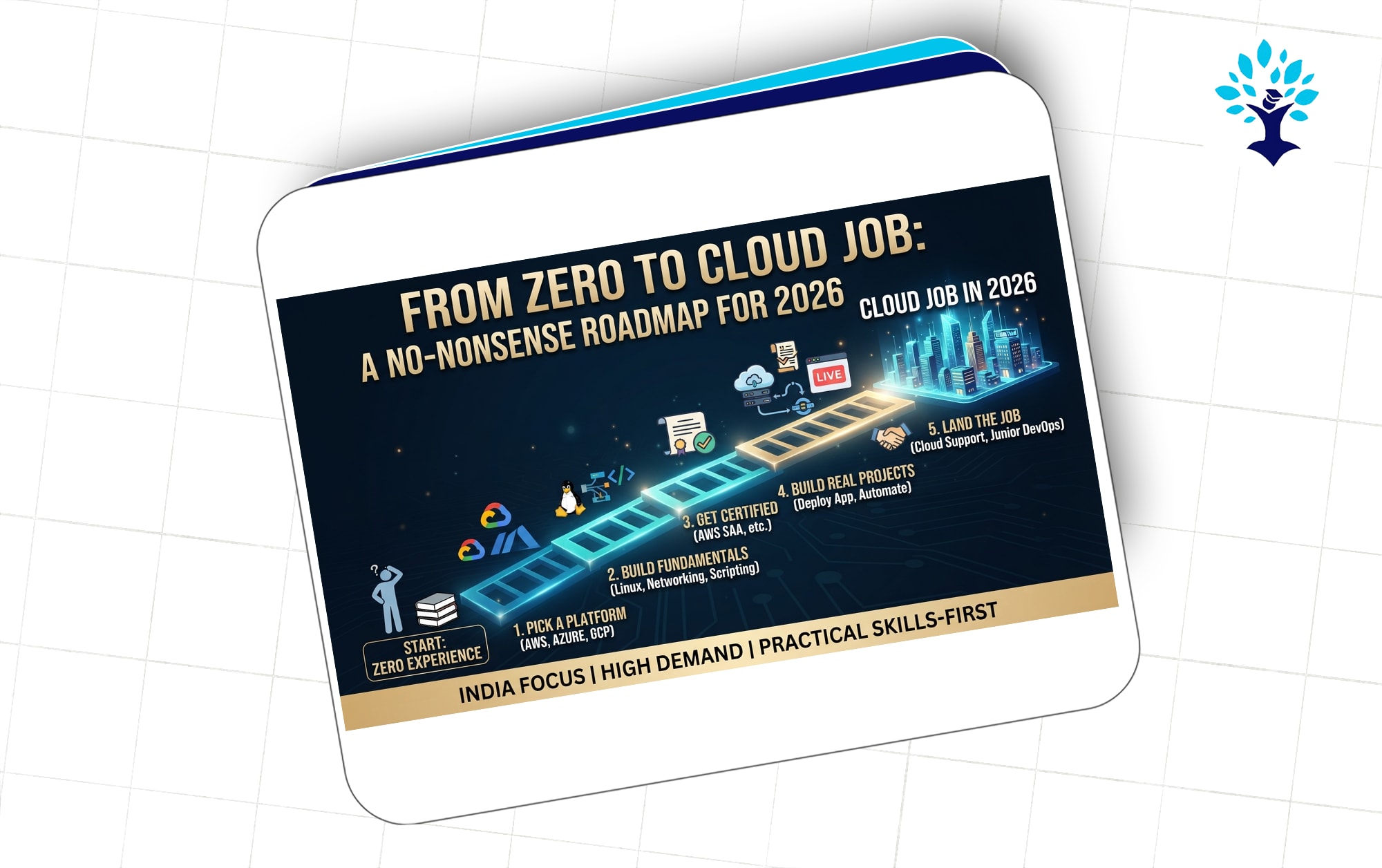
A No-Nonsense Roadmap for 2026
Type "how to learn cloud computing" into YouTube, and you'll drown in hundred-video playlists, most of them dragging basic concepts across three hours when they could've been explained in twenty minutes. That's the actual problem for most beginners — not a lack of resources, but too many of them, with no clear order and no honest answer to the question that matters most: what do I actually need to know to get hired, and what can wait?
This isn't another generic "here are 47 free resources" list. It's a straight path — what to learn first, in what order, and how to turn that learning into an actual job offer instead of a folder full of half-finished courses.
Why Cloud Computing Is Still One of the Safer Bets in Tech
Every company running any kind of digital operation has either already moved to the cloud or is in the process of moving. That's not an exaggeration — it's just where infrastructure has settled. Banks, e-commerce platforms, hospitals, logistics companies, none of them are running their own servers in a back room anymore. This creates a strange, steady kind of demand — not the explosive hype cycle AI gets, but a quiet, dependable need for people who can build, secure, and manage cloud systems.
The pay reflects that stability, too. Fresh cloud engineers in India typically start around ₹5–9 LPA, and with three to five years of solid experience and a couple of certifications behind them, ₹18–30 LPA becomes realistic. Senior cloud architects clear well beyond that. What makes this field particularly appealing for someone starting from scratch is that you don't need a computer science degree to break in — plenty of people move into cloud roles from support, testing, or even non-technical backgrounds with the right structured effort.
Step One: Pick a Cloud Platform and Stop Overthinking It
This is where most beginners waste weeks they didn't need to. AWS, Azure, and GCP all do fundamentally similar things, and switching between them later is nowhere near as hard as people assume once you've learned one properly.
AWS has the largest market share in India and the most job listings by a fair margin, so it's the safest default if you're unsure
Azure makes sense if you're targeting companies already running Microsoft-heavy environments, which includes a large chunk of enterprise India
GCP is smaller in job volume but strong in data-heavy companies and startups working with analytics or machine learning
Pick one, commit to it for at least three months, and ignore the temptation to "learn all three" before you've gotten a job in any of them.
Step Two: Build the Fundamentals Before Touching Certifications
A lot of people jump straight to certification prep and skip the boring part underneath it, which is exactly why so many certified candidates still struggle in interviews. Before any certification, get comfortable with these basics properly:
Networking fundamentals matter more than most beginners expect — understanding how servers talk to each other, what a VPC actually does, and basic security groups will save you from feeling lost the moment an interviewer goes one level deeper than the certification syllabus covers.
Linux command line comfort is close to non-negotiable. Cloud servers run on Linux far more often than not, and fumbling through basic commands in an interview is one of the fastest ways to lose credibility even if your certification looks impressive on paper.
A scripting language, usually Python or Bash, rounds this stage out. You don't need to be a software engineer, but automating repetitive tasks is a huge part of actual cloud work, and interviewers notice quickly whether a candidate can write even a simple script or not.
Step Three: Get Certified, But Pick the Right One
Certifications open doors mainly because they get your resume past automated filters, not because they prove deep mastery on their own. That said, picking the right one matters.
AWS Certified Solutions Architect – Associate is the single most recognized entry point and shows up in more job listings than almost any other cloud certification in India
Microsoft Certified: Azure Administrator Associate works well if you're targeting enterprise or Microsoft-partner companies specifically
Google Associate Cloud Engineer suits people leaning toward data or analytics-adjacent cloud roles
One certification, done properly with hands-on practice alongside it, beats three certifications collected purely for the badge on LinkedIn.
Step Four: Build Something Real, Not Just Study Material
This is the step almost everyone skips, and it's the exact reason a lot of certified candidates still get rejected at the interview stage. Recruiters have started asking for projects because certifications alone stopped being proof of practical skill a while ago.
Deploy a simple website or application on your chosen cloud platform, end-to-end, including basic security setup
Set up a small automated pipeline — even something modest like an automated backup script — and document what you built and why
Break something on purpose in a sandbox environment and fix it, since troubleshooting under pressure is exactly what interviews test for
Write a short explanation of each project on your resume or LinkedIn, focused on the problem it solved rather than just the tools used
A candidate with one well-documented project and a solid certification consistently beats a candidate with three certifications and nothing built.
Step Five: Actually Get Hired — Not Just Qualified
Being job-ready and getting hired are two different problems, and this is where a lot of otherwise strong candidates get stuck for months.
Apply to cloud support and junior DevOps roles first if you're a fresher, even if "cloud architect" is the eventual dream. These entry points hire faster, ask for less experience, and build the exact credibility that makes the bigger jump easier a year or two later. Target companies that are actively migrating to the cloud right now, rather than ones that already have mature, fully-built teams, since active migration projects create far more entry-level openings.
Network with people already working in cloud roles instead of only applying cold through portals — a referral consistently moves faster than an application sitting in a queue of three hundred others. Cloud and cybersecurity often overlap in real-world infrastructure, so it’s also worth exploring High-Paying Jobs in Cybersecurity if security is a career path you're considering. And when the interview finally comes, be ready to talk through your actual project in detail, because that conversation usually decides the outcome more than the certification listed at the top of your resume.
Final Thought
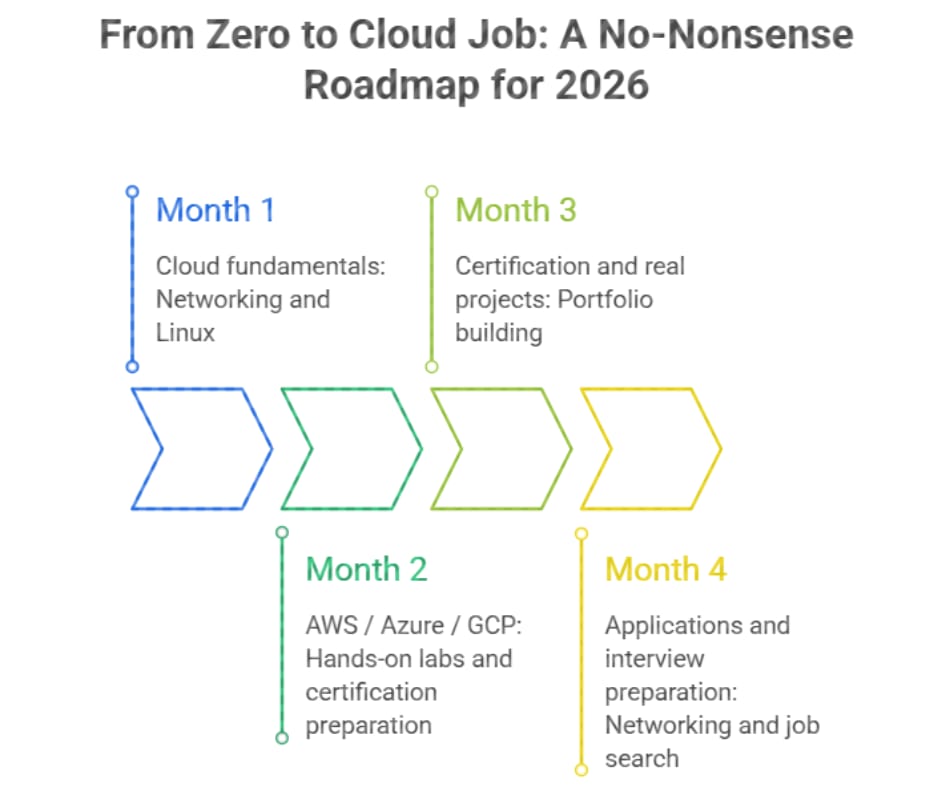
Cloud computing rewards a specific kind of person — someone patient enough to build the fundamentals properly instead of rushing straight to a certification badge. Pick one platform, learn it in the right order, build something you can actually explain in an interview, and apply to the entry points that hire freshers fastest. That sequence, followed properly over three to four months, gets people hired far more reliably than jumping between five different courses ever will.