Highest Paying Jobs Without a Degree in 2026: What Really Pays Now
Published on August 05, 2026
Blogs
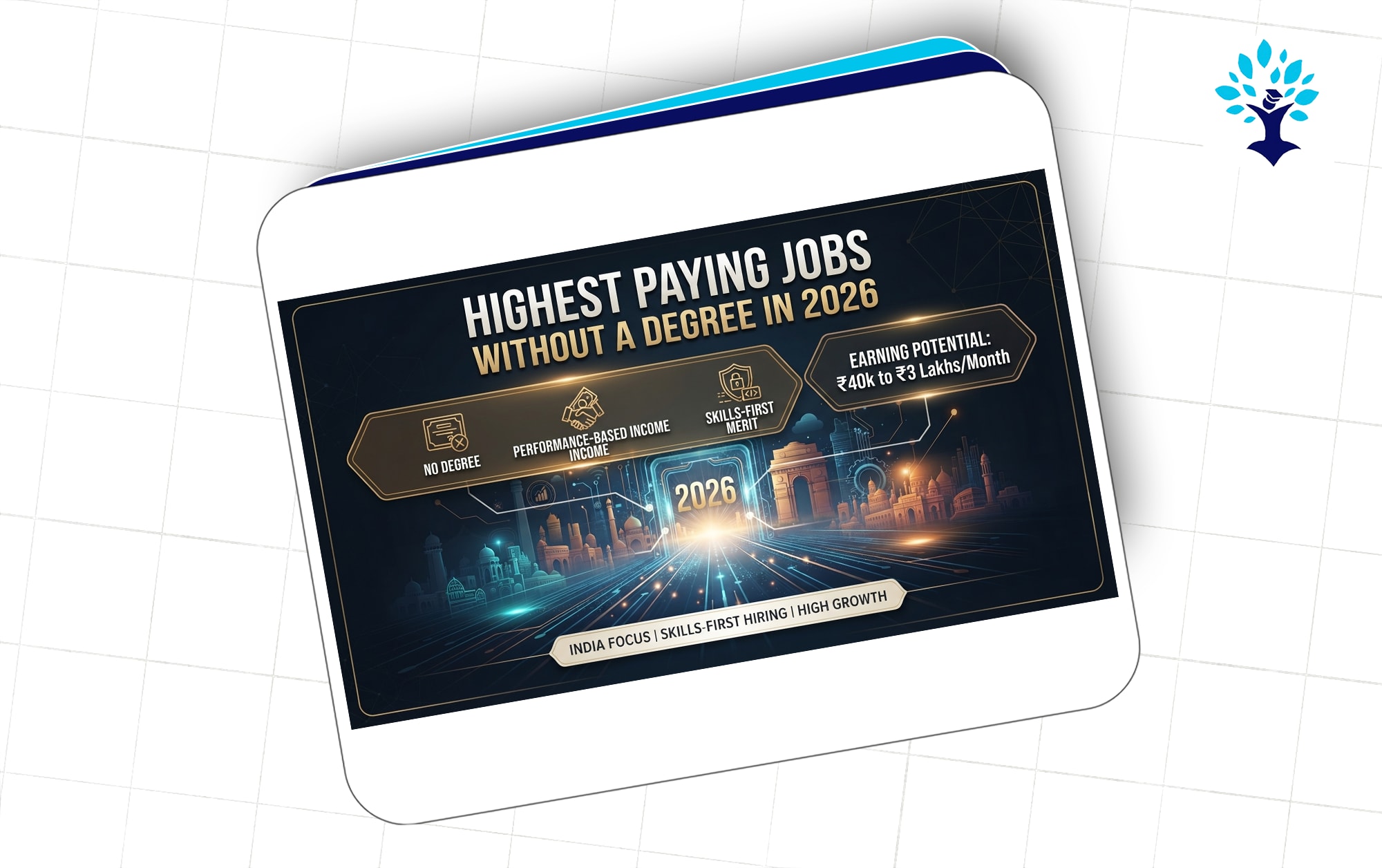
Highest Paying Jobs Without a Degree in 2026
There's a conversation that still happens in a lot of Indian households. A kid finishes twelfth, doesn't get into a "good" college, or drops out halfway through, and suddenly the whole family acts like a door just slammed shut on their future. Honestly, that mindset has been stale for years now — but it still quietly shapes how people see their own options, often before they've even tried anything.
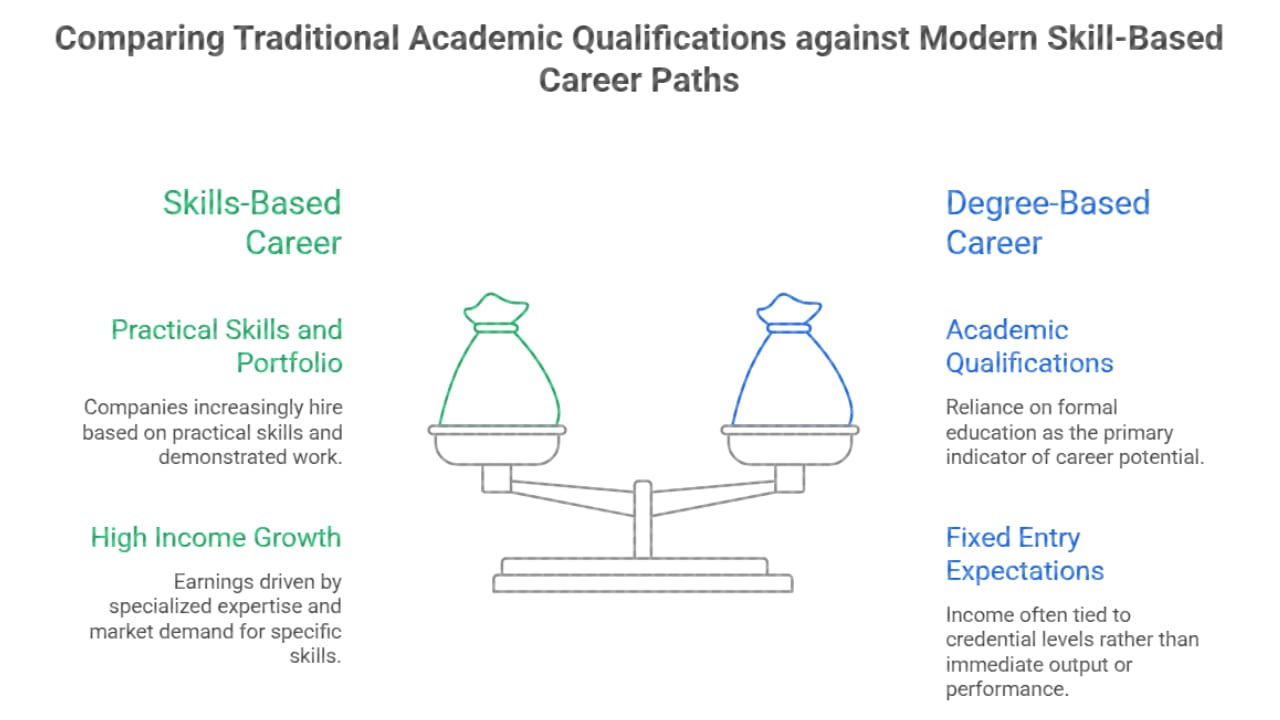
The job market in 2026 just doesn't run on that logic anymore. Employers — especially in tech, digital, and sales — are far more interested in what you can actually do than what degree is framed on your wall. LinkedIn's workforce data backs this up: over 70% of Indian companies now hire based on demonstrated skill rather than educational background, and nearly 40% of IT roles in the country are already skills-first. This isn't some niche trend either — TCS, Infosys, and a growing list of startups have all said as much publicly. It's opened up a genuinely walkable path for people who never finished a degree, or never wanted one in the first place.
Where People Usually Trip Up
Before getting into the list, it's worth naming the mistakes that quietly derail people who'd otherwise do just fine.
Skill-hopping. Jumping between three or four skills every few weeks instead of sticking with one long enough to actually get good. Most high-paying no-degree fields need three to six months of steady effort before real money shows up.
Certificate-collecting. Chasing badges without ever building anything real. A stack of course completions doesn't mean much next to one working project that a client can actually point to.
Undercharging. This happens a lot in the first few months, out of fear that nobody will hire someone without formal credentials. Left uncorrected, it caps how far the whole career can grow.
Ignoring the business side. Freelancers who never learn to pitch, invoice, or negotiate tend to plateau well below what their actual skill level should be earning.
Comparing yourself to the wrong person. Someone two years into web development isn't a fair benchmark if you're three months in — treating it like one just breeds discouragement for no reason.
The Roles Actually Worth Looking At
Web and app development. Solid coding skills — JavaScript, React, mobile frameworks — translate into ₹40,000 to over ₹1.5 lakh a month, depending on experience. Freelancers working with international clients often do considerably better.
Digital marketing. SEO, paid ads, social strategy, content — this is the core of it. Skilled marketers pull ₹30,000 to ₹1 lakh a month, and agency owners or independent consultants go well past that once they've built a client base.
Cybersecurity and ethical hacking. Genuinely one of the most merit-based fields around. Certs like CEH, CompTIA Security+, and OSCP carry more weight than a degree in most hiring conversations. Ethical hackers doing pen testing or bug bounty work through platforms like HackerOne can land ₹80,000 to ₹2.5 lakh a month once they've built a track record.
Sales. Purely performance-based, and one of the oldest no-degree paths that's held up for decades. Top performers in B2B or high-ticket sales regularly clear ₹50,000 to ₹3 lakh a month once commissions kick in.
Video editing and content creation. Demand exploded with Reels, YouTube, corporate video, and OTT all competing for a limited pool of skilled editors. This work is also naturally remote-friendly, so it sells easily to international clients.
UX and graphic design. A portfolio does far more talking here than a certificate ever will. Skilled designers land ₹35,000 to ₹1.2 lakh a month, and freelance or contract work often pays better per project than a fixed salary would.
Skilled trades. Electricians, plumbers, HVAC technicians — genuinely in short supply across urban India right now. A licensed electrician in a metro city can charge ₹500 to ₹2,000 an hour, and those who scale into their own contracting business can build something worth crores over time.
Real estate and property consulting. No degree needed to start, and top performers in metro markets earn commission-based income that regularly crosses ₹1 lakh a month — sometimes much more in a good quarter.
Beauty and grooming. India's beauty industry is worth over ₹1 lakh crore and is still growing. Bridal makeup artists in cities like Mumbai and Delhi charge ₹25,000 to ₹2 lakh per booking once they've got a strong portfolio and client base.
Cloud computing support and administration. Entry-level roles built around AWS or Azure certifications pay ₹70,000 to ₹2 lakh a month, and the shortage of trained people in this space is still wide open.
Why This Isn't Just a Trend
A few things pushed this shift along together, not just one factor doing all the work. Remote work made geography almost irrelevant for digital skills — a content writer in Rewa or a video editor in Bikaner can now compete for the same clients as someone sitting in Mumbai. AI adoption forced companies to hire fast for skills that didn't exist as job titles five years ago, If you're specifically considering a move into tech, it's also worth looking at [Top 5 Tech Career Worth], especially if you're choosing a skill with long-term earning potential rather than just chasing the fastest-paying option today. and there simply wasn't time to wait for a fresh batch of graduates to catch up. On top of that, the cost of hiring degree-first candidates who then need months of training pushed a lot of companies toward portfolios and practical tests instead of transcripts.
How to Actually Break In
Pick one field that genuinely interests you, not whichever one pays the most on paper. You'll actually stick with something you don't hate learning — that matters more than people expect early on.
Commit to going deep for 90 days before deciding whether it's working. Most people quit right before the skill starts paying off, which is the frustrating part of how this usually plays out.
Learn through free or low-cost platforms first — YouTube, Coursera, freeCodeCamp, Codecademy for anything technical. Don't feel pressure to pay for a course before you know you'll stick with it.
Build something real early, even something small, and put it somewhere visible. A portfolio beats a certificate almost every time in these fields, no matter what the course marketing tells you.
Take your first paying client or gig before you feel fully ready. Confidence usually shows up after the first project lands, not before — waiting for it to arrive first just delays everything.
A Realistic Timeline, Not a Fantasy One
Nobody goes from zero to ₹1 lakh a month in thirty days, no matter what a course landing page promises. Most people who build solid income in these fields follow a fairly similar arc: three to six months of learning and building small, unpaid or low-paid projects, then another six months to a year of gradually raising rates as their portfolio and reputation grow. It's slower than the ads suggest and faster than most people fear, once they actually get moving. And the people who make it work usually aren't the most talented ones — they're just the ones who kept going past the point where it got boring or uncertain.
Final Thought
Not having a degree isn't the wall it used to be. Pretending otherwise is mostly just old thinking that hasn't caught up with where the market actually stands. What matters is picking one skill and sticking with it long enough to get good, not collecting certificates or waiting for permission to start. The people earning well in these fields didn't wait for the "right" opportunity to show up on its own. They picked a direction, built something real, and let the work speak for itself over time. In 2026, that path is wider open than it's probably ever been.