No Experience, No Problem: How to Write a Resume That Still Gets You Hired in 2026
Published on July 26, 2026
Blogs
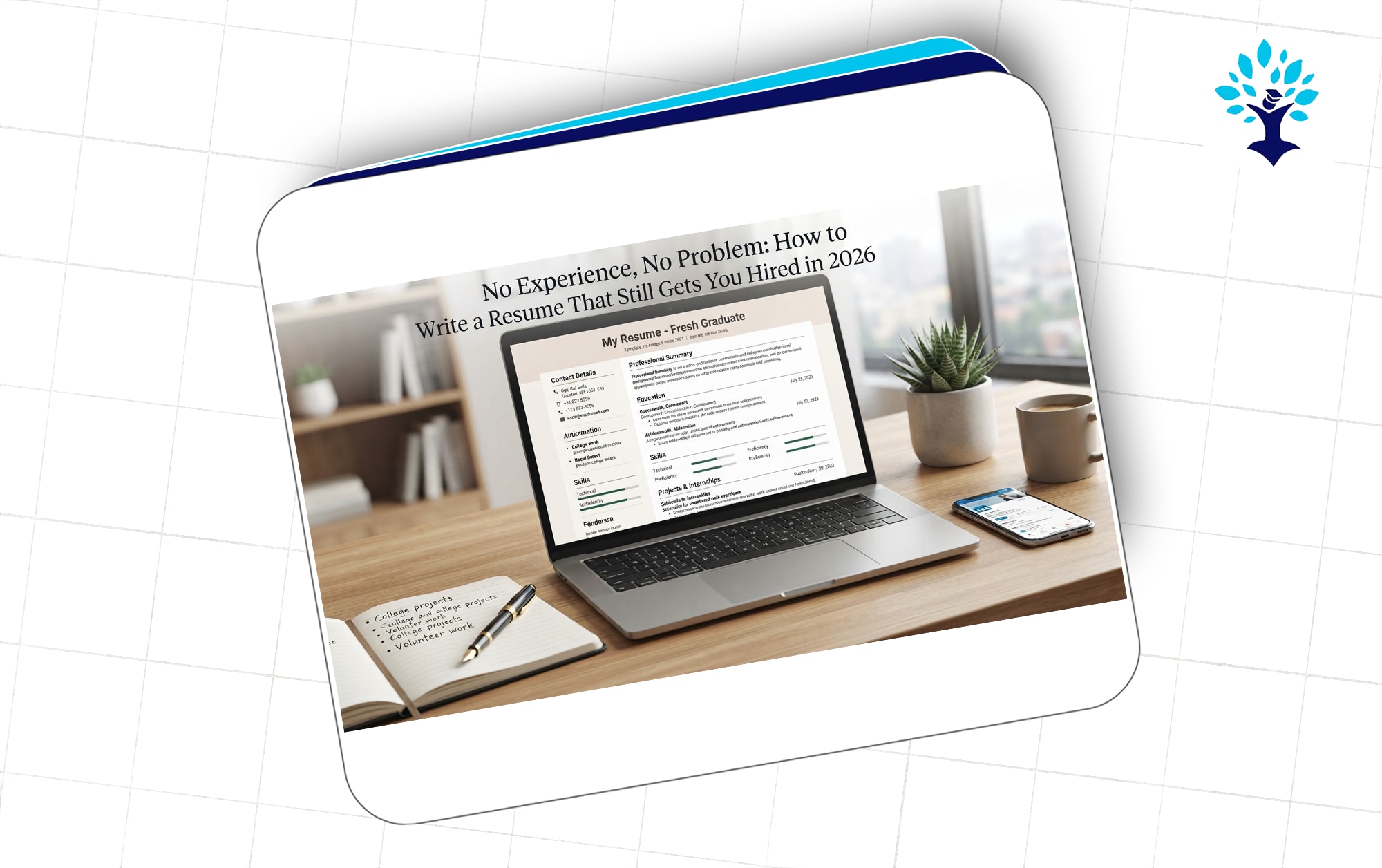
How to Write a Resume That Still Gets You Hired in 2026
You open a blank document. The cursor blinks. And the very first section every resume template asks for is "Work Experience."
You have none. So now what?
If you've closed that document in frustration more than once, relax — you haven't done anything wrong. This is just the most annoying stage of job hunting, and nearly everyone goes through it. Here's what nobody tells you upfront: recruiters hiring for entry-level roles don't expect a fresher to walk in with five years of experience. That would be a strange thing to expect from a fresher role in the first place. What they actually want is proof that you can think, learn fast, and show up ready to work — and you can prove all three without a single paycheck to your name.
Let's fix this resume, section by section.
Stop Waiting for "Real" Experience. You Already Have Some.
Here's the mistake almost every fresher makes: they think "experience" means a paid, full-time job with an offer letter and an HR email ID. It doesn't. Experience is simply proof that you did something, dealt with a problem, and came out the other side having learned something. That's it. That's the whole definition.
So before you panic about an empty work history, ask yourself honestly — did you ever:
Lead a group project in college and actually get it done on time
Take up a part-time gig, internship, or freelance task, even a small one
Volunteer for a college fest, NGO, or community event
Run a social media page or Instagram account for someone — even a friend's small business
Try a side hustle, tuition classes, reselling, anything
If you nodded at even one of these, you have material to work with. The problem was never that you lacked experience — it's that nobody taught you how to write it down properly.
Build the Resume Around What You Have — Not What You're Missing
Since there's no long job history to fill space, don't design your resume as if there should be one. Flip the order. Put your strengths where the "Experience" section usually sits, and let those do the heavy lifting. A resume that actually works for a fresher usually looks like this:
Contact details – Name, phone number, email, city, and LinkedIn profile (if you have one)
Resume summary/objective – 2-3 lines about who you are and what you bring
Education – Your degree, college name, and graduation year
Skills section – Technical and soft skills relevant to the job
Projects, internships, or certifications – Anything hands-on
Extracurriculars or volunteer work – Leadership, teamwork, initiative
Notice "work experience" isn't even in that list yet. That's on purpose. When you don't have much of it, you don't put it front and centre — you let your strengths speak first and let the recruiter reach your experience section later, once they're already interested.
Kill the Generic Objective Line. Please.
"Seeking a job where I can utilise my skills and grow." Stop. Just stop. A recruiter has read that exact sentence a thousand times this week alone, and it tells them absolutely nothing about you.
Be specific instead. Say your field, mention one or two real skills, and say what you'd actually bring to the table. Something closer to this:
"Recent commerce graduate with hands-on experience in Excel-based data analysis through college projects, looking to bring strong analytical and communication skills to an entry-level finance role."
Short. But it actually tells the reader something real about you — not a filler sentence copied off Google.
Your Education Section Is Doing Less Work Than It Could
Most freshers just type their degree name and college and move on. That's a wasted opportunity. This section deserves more effort — add relevant coursework, academic projects, or achievements that actually connect to the job you're applying for. Were you part of a college committee? Did you score particularly well in a subject that's directly relevant to the role? Did you finish a certification alongside your degree? Put it in. This is one of the easiest ways to add genuine, relevant content to a resume that would otherwise feel thin.
Don't Just List Skills. List the Right Skills.
Read the job description properly before you write this section. Actually read it — not skim it. Then match your skills to it instead of copy-pasting a generic list you found online. Split it into two buckets:
Technical skills: MS Excel, Canva, basic coding, Tally, data entry, digital marketing tools — whatever's relevant to your field
Soft skills: communication, time management, problem-solving, teamwork, adaptability
And here's a small but important thing — don't just write "hardworking" or "dedicated" and leave it there. Anyone can type those words. If you claim strong communication skills, make sure something else on your resume backs it up — a presentation you gave, an event you hosted, a customer-facing volunteer role. Words without proof don't land.
The Words You Choose Matter More Than You Think
Instead of writing something limp like "Was responsible for managing college fest budget," flip it into something that actually sounds like you owned it:
Organized
Coordinated
Managed
Designed
Analyzed
Led
Created
Improved
For example: "Coordinated a team of 8 students to organize a college cultural fest with a budget of ₹50,000" sounds far more impressive than "Helped with college fest" — even though both sentences are describing the exact same thing you did. Words carry weight. Use ones that carry the right amount.
Your Perfect Resume Might Be Getting Rejected by a Robot
Here's something that surprises a lot of freshers — many companies run resumes through software before a human ever lays eyes on it. This is called an ATS (Applicant Tracking System), and if your formatting confuses it, your resume gets filtered out automatically. Doesn't matter how good your content is if a bot rejects it in the first three seconds. So keep it simple:
Use a simple, clean format — avoid heavy graphics, tables, or unusual fonts
Save your resume as a PDF unless the job posting asks for Word format
Use keywords directly from the job description naturally in your resume
Stick to standard section headings like "Education" and "Skills" instead of creative alternatives
A resume that looks stunning to a human but confuses the software never even reaches a human. That's the annoying truth about hiring in 2026. And remember, getting your resume shortlisted is only the first step. Many employers now follow it with AI-powered screening rounds, so knowing how to crack ai proctored and video interview can significantly improve your chances of moving to the final hiring stage.
One Page. That's the Limit. Don't Fight It.
As a fresher, one page is more than enough — and honestly, trying to stretch it to two just to look "experienced" will backfire. Recruiters spend a few seconds on the first scan of a resume, not a few minutes. Cramming it with filler will only bury the good stuff. Three strong, specific project descriptions will always beat ten vague, forgettable lines.
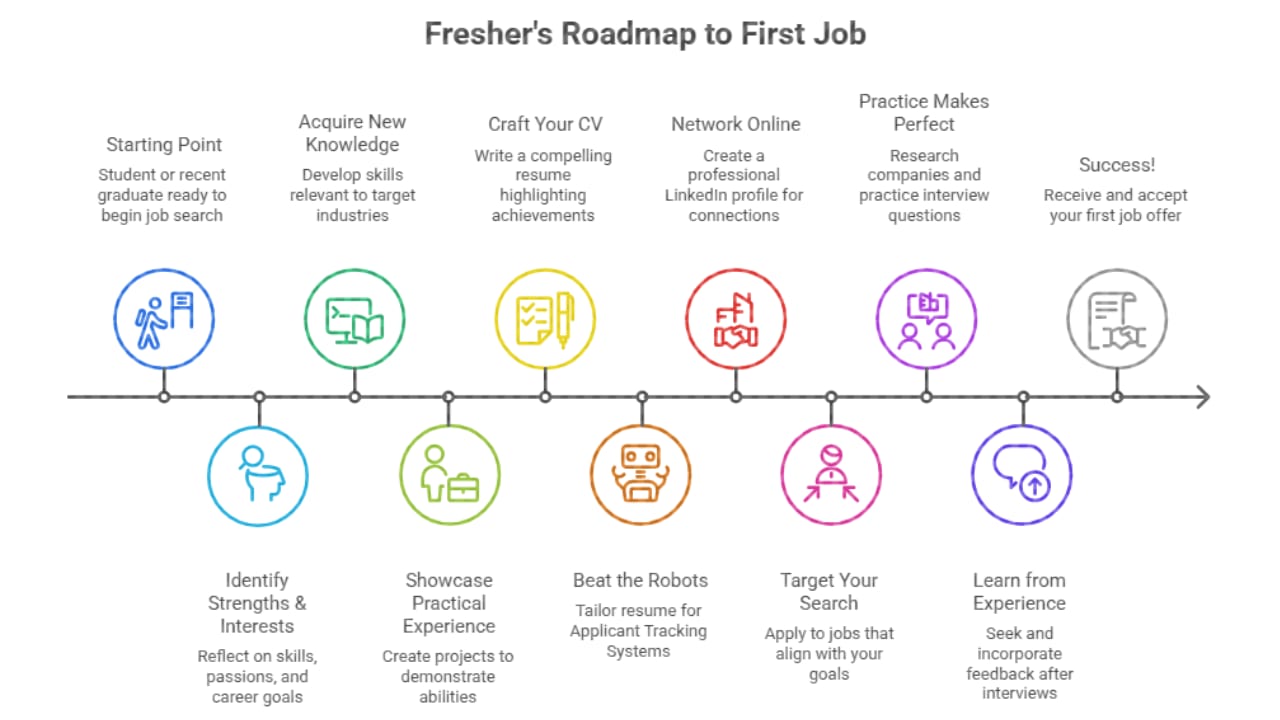
Mistakes That Quietly Kill a Fresher's Resume
Sending the exact same resume to every single job, hoping quantity beats relevance
Listing a skill you couldn't actually explain if asked about it in the interview
Writing an objective that only talks about what you want, and nothing about what you bring
Skipping the proofread — one typo and a recruiter's trust drops instantly
Using an email address you made in class 9 that nobody should still be using professionally
The Real Talk
Having no work experience doesn't mean you have nothing to offer — it just means you've been telling your story wrong. Recruiters hiring freshers care far more about your potential, attitude, and ability to learn fast than a stack of past job titles. Build the resume around real projects, real skills, and real initiative, however small they seem to you right now, and you'll stand out even with zero "official" experience on paper.
Your first job is out there. Your resume just needs to stop getting in your own way.