Interview Red Flags: The Small Things That Cost You the Job Without Warning
Published on August 01, 2026
Blogs
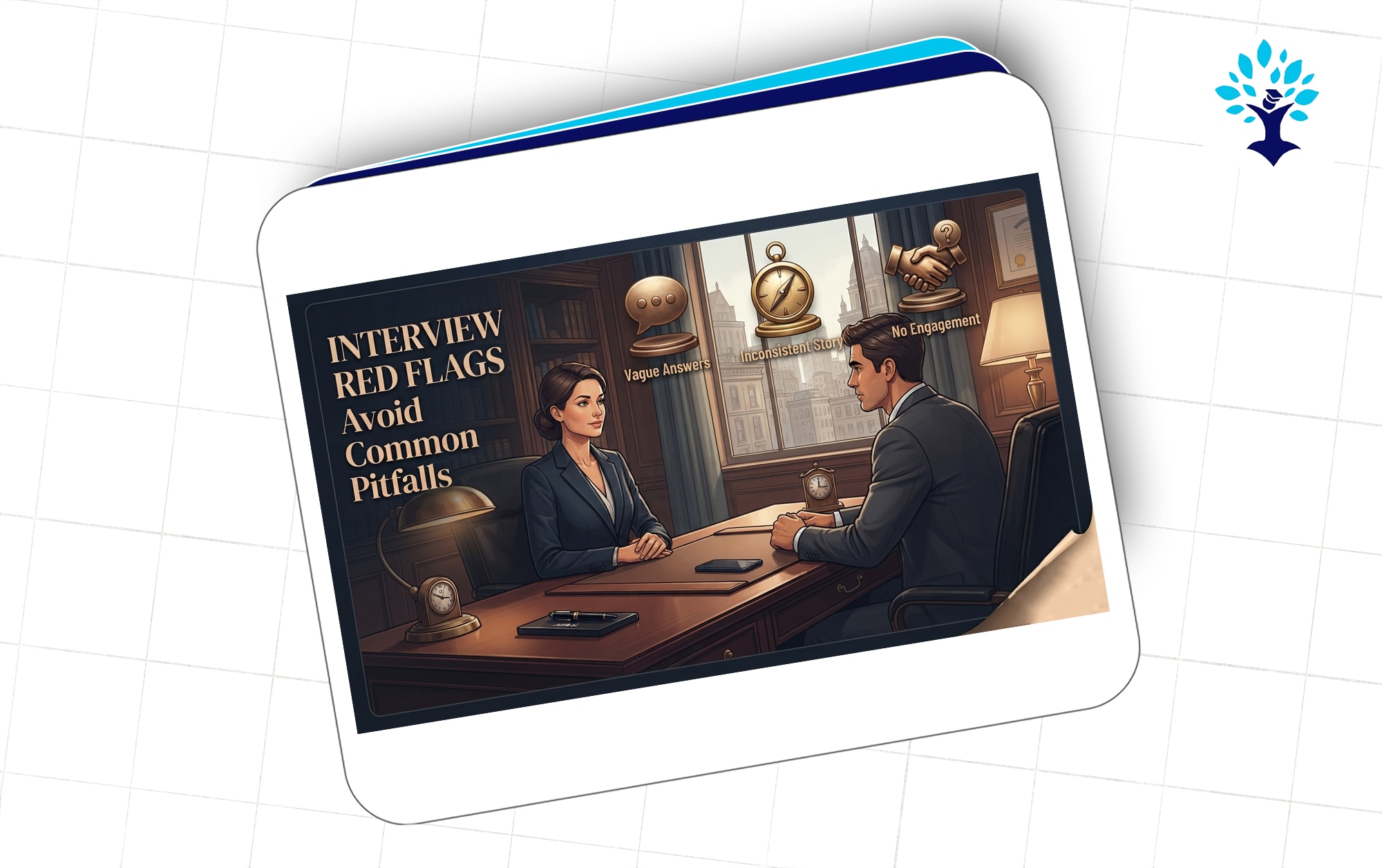
The Small Things That Cost You the Job Without Warning
Here's what usually happens. You walk out of an interview feeling good. The answers came out smoothly, nobody looked confused, you shook hands on the way out, and felt like it went fine. Then, a week later, someone else gets the offer. And it's rarely because that person knew more than you did. It's because somewhere in the room, you gave off a small signal that made the interviewer pause, even if they couldn't have named it in the moment.
That's the thing about red flags. They're small. Nobody's writing them down as "candidate said X, disqualified." They add up in the back of an interviewer's head without much noise, and by the end of the conversation, there's a feeling, not a checklist. Recruiters and hiring managers sit through hundreds of these a year, so they've gotten fast at spotting the pattern even when they can't always explain why. Most of it has nothing to do with your skills. It's about how you talk, whether your story stays consistent, and whether you seem invested in the room or just going through the steps.
When You Can't Explain Your Own Work
Ask someone about a project they "led," and watch what happens when the answer is thin. "I helped improve efficiency" — okay, but improve it how? By how much? Compared to what? No number, no specific action, nothing you can picture. It sounds like it's hiding something, even when there's nothing to hide at all.
A few ways this shows up:
Can't walk through a project step by step, even one they supposedly ran themselves
The story shifts the second a follow-up question lands
Taking credit for a team result without being able to say what they personally did
Reaching for buzzwords instead of anything you could picture happening
Nobody's expecting a flawless answer here. Interviewers are just poking at the story a little to see if it holds. When it doesn't, that's the flag. Not the shaky first answer. The wobble right after.
Telling the Story Two Different Ways
This one's rarely on purpose, which is exactly what makes it dangerous. You describe your last role one way to the first interviewer and slightly differently to the second. Or your resume says one thing, and what comes out of your mouth in the room doesn't quite match.
Hiring teams compare notes across rounds, specifically looking for this kind of drift. If your timeline moves around, or the reason you left a job changes depending on who's asking, it reads as either shaky memory or something worth digging into. Either way, it doesn't land well. Even when the mismatch was totally innocent.
Trashing a Former Employer
Complaining about an old manager. Calling a past company toxic. Venting about a team that let you down. All of it tells the interviewer more about how you might talk about them a year from now than it tells them about your last job. This holds true even when your complaints are completely fair.
Blaming a former boss without owning any part of what went sideways
Painting an entire team or company with the same negative brush
Going into more detail about a conflict than anyone asked for
Turning the interview into a place to vent instead of a conversation
There's a version of honesty that's fine to say out loud. Something like "the role didn't line up with where I wanted to grow." There's another version that sounds like a warning bell. Interviewers can usually tell which one they're hearing.
Showing Up Without Doing the Homework
Not knowing what the company does. No real reason for why you applied here specifically. These are two of the most common red flags there are, and two of the easiest to avoid. It reads as low interest almost instantly, whether or not that's the case.
Struggling to explain, in your own words, what the company does
Asking a question that's answered right there on the job posting
Nothing solid to say about why this role, this company, specifically
Mixing the company up with a competitor, or getting basic facts wrong
You don't need hours for this. Twenty minutes on the company site, a scan of recent news, a careful read of the job description. That covers most of what comes up.
Having No Questions of Your Own
When the interviewer flips it back and asks if you have questions for them, "not really" is one of the worst things you can say. Not because it's rude. Because it suggests you haven't thought seriously about whether this role is even right for you.
One or two decent questions change the whole tone. How's the team structured? What does success look like six months in? Has the role changed recently? Small stuff, but it shows you're sizing up the opportunity the same way they're sizing you up. Skipping it costs more than most candidates realize.
Salary Answers That Don't Add Up
Ask for way more than the role supports with nothing to back it up, and that raises an eyebrow. Refuse to give any number at all, and that raises a different one. The first says you didn't do your homework. The second can come off as evasive, even when that's not what's going on.
A figure well above what the role or your experience level typically pays
Dodging the question entirely instead of offering even a rough range
Anchoring hard to a previous salary instead of what the market pays for this role right now
A number that jumps noticeably between rounds with no explanation for why
Walk in with a researched range ready, and most of this stops being a problem at all.
The Small Stuff Nobody Says Out Loud
Checking a phone mid-interview. Showing up late with no heads-up. Answers so rehearsed they sound like lines from a script instead of an actual person talking. Looking checked out, especially on a video call, where there's nowhere to hide it.
None of these alone will sink an interview. But stack a few of them together, and interviewers are trained to notice the pattern, not just excuse any single slip.
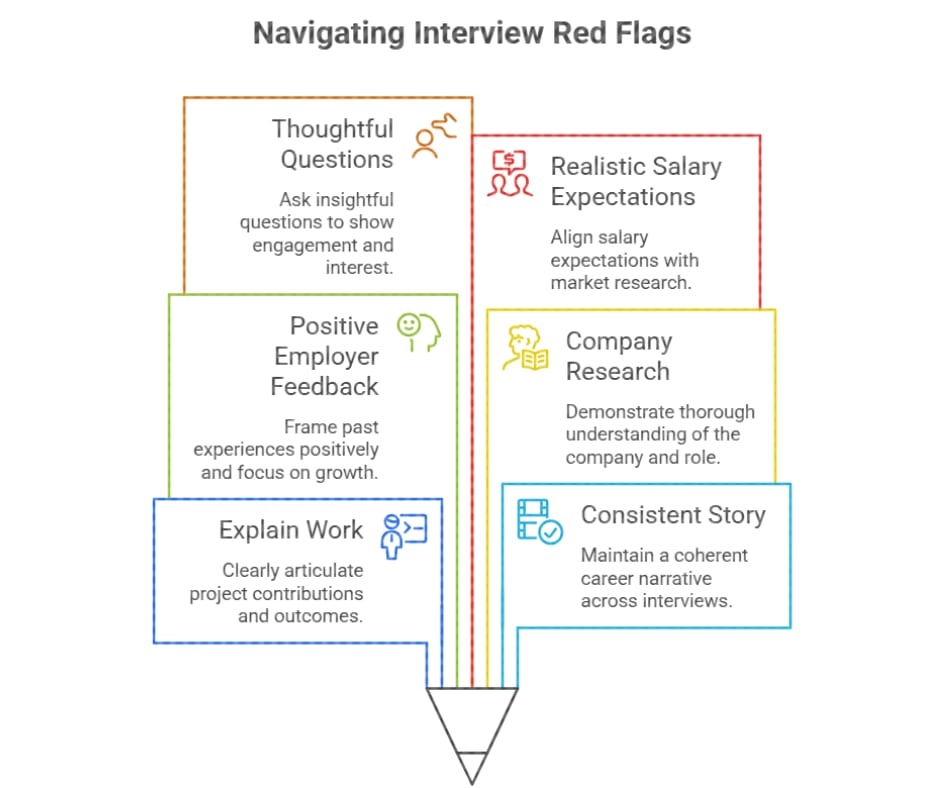
Confidence With Nothing Behind It
Claiming expertise in absolutely everything, but unable to back a single bit of it up with a real example — that's its own kind of red flag. It's not the same as confidence, which most interviewers tend to like seeing. This is closer to bluffing. And it doesn't take much to catch. One or two follow-up questions, and someone with real expertise answers without missing a step. Someone bluffing usually stumbles right there.
Final Thought
None of this is really about talent. Most candidates who trip over these red flags could do the job perfectly well. What gets in the way is inconsistency, a bit of laziness on prep, or small habits that come across as disinterest, even when the person really does want the role. Fix even two or three of these before your next interview, and you're already ahead of most people you're competing against. The fixes don't cost much either. Mostly just a bit of honest self-review before you walk through the door. The interview doesn't really end when you leave the room. What you do afterward can also affect how recruiters remember you and whether you stay in consideration. Learn what to do after the interview ends to handle the follow-up properly.