The Interview Question Nobody Prepares For: What Employers Really Mean by "Soft Skills"
Published on August 08, 2026
Blogs
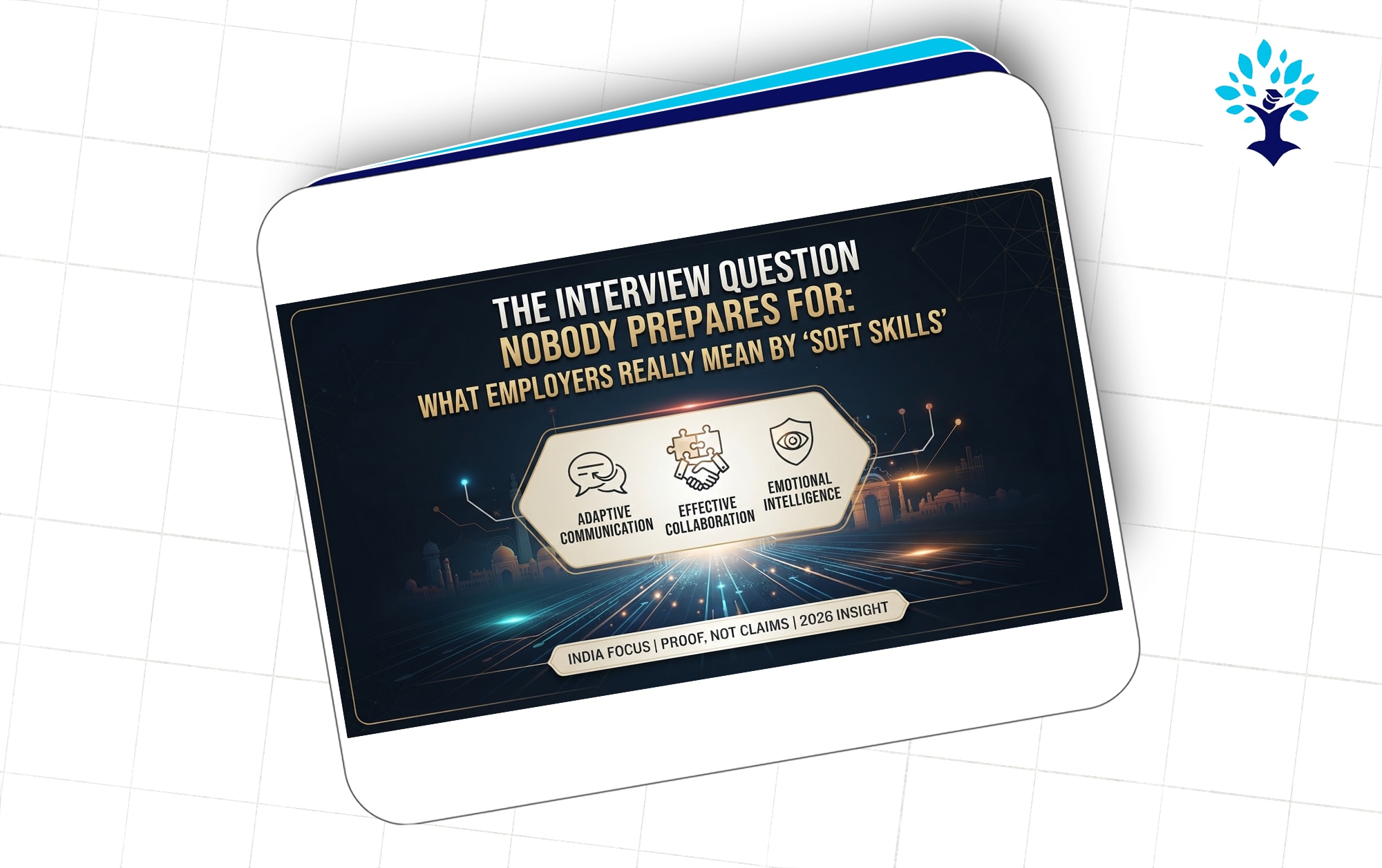
What Employers Really Mean by "Soft Skills"
Ask any fresher what soft skills they have, and you'll get the same rehearsed line every time — "I'm a good team player, hardworking, and a quick learner." Interviewers hear that sentence so often that it barely registers anymore. It's not that these traits don't matter. It's that saying them out loud proves nothing, and recruiters figured that out a long time before candidates did.
Here's what's actually changed in 2026 — companies have gotten far more specific about which soft skills they're testing for, and far better at catching people who only have the vocabulary without the substance behind it. This piece breaks down what employers genuinely mean when they list "strong communication skills" in a job posting, and how to actually build the ones that matter instead of just repeating the phrase in an interview.
Why Soft Skills Are Getting Weighted Heavier Than Before
Technical ability gets you shortlisted. It rarely decides who gets the offer once you're sitting across the table from two or three other equally qualified candidates. Companies have leaner teams now, tighter budgets, and less patience for someone who's technically capable but difficult to work with, slow to adapt, or unable to explain their own thinking clearly. That combination has pushed soft skills from a "nice bonus" into something interviewers actively screen for using scenario-based questions rather than the old, easy-to-fake "tell me about yourself."
There's a practical reason behind this, too. Remote and hybrid work has made communication and self-management skills far more visible than they used to be. In an office, a manager could informally track who was struggling. Across a screen, with people spread across time zones and locations, the employees who communicate clearly and manage their own time well stand out immediately — and the ones who don't become obvious just as fast.
The Skills That Actually Show Up in Real Interviews
Communication that adapts to the audience — Not just talking clearly, but explaining a technical problem differently to a manager than you would to a teammate on the same project. That ability becomes especially valuable in technical fields, where roles are evolving quickly — including the top careers in artificial intelligence and machine learning. Interviewers test this by asking candidates to explain something complex in simple terms, and the ones who default to jargon regardless of who's listening tend to lose points quietly.
Adaptability under real pressure — Companies changing direction fast need people who don't freeze or complain when a plan shifts mid-project. This shows up in behavioral questions like "tell me about a time your plan completely fell apart," and vague answers here get noticed immediately.
Emotional intelligence — Reading a room, managing your own frustration, and picking up on a colleague's stress without needing it spelled out. Scenario questions around workplace conflict are usually testing this specifically, not looking for a rehearsed "I always stay calm" answer.
Time management and ownership — Less about using a planner and more about whether someone can be trusted with a deadline without constant follow-up. Managers talk about this constantly in feedback sessions, and it's one of the fastest ways to either build or lose trust early in a new job.
Collaboration across functions — Working smoothly with people outside your immediate team has become non-negotiable in flatter, leaner company structures where cross-department projects are now the norm rather than the exception.
The Ones That Get Overlooked but Matter Just as Much
A few soft skills rarely make it onto the standard "top skills" lists, even though hiring managers bring them up constantly in private feedback about why someone didn't get an offer.
Curiosity is one of them. Candidates who ask sharp, specific questions during an interview — about the team, the challenges, the actual work — tend to leave a stronger impression than those who nod along and ask nothing. It signals someone who'll keep learning on the job instead of coasting once they're hired. Receiving feedback well is another. Plenty of people say they're "open to feedback" in an interview and then visibly bristle the moment an interviewer pushes back gently on an answer. That reaction, small as it looks in the room, tells an interviewer a lot about how someone will handle a manager's critique three months into the job.
Curiosity and initiative — asking good questions, not waiting to be told exactly what to do
Handling feedback gracefully — responding to pushback without getting defensive
Self-awareness — knowing your own weak spots and talking about them honestly instead of reciting a rehearsed "weakness" answer
Conflict resolution — de-escalating disagreements at work without needing a manager to step in every time
How to Actually Demonstrate These Instead of Just Naming Them
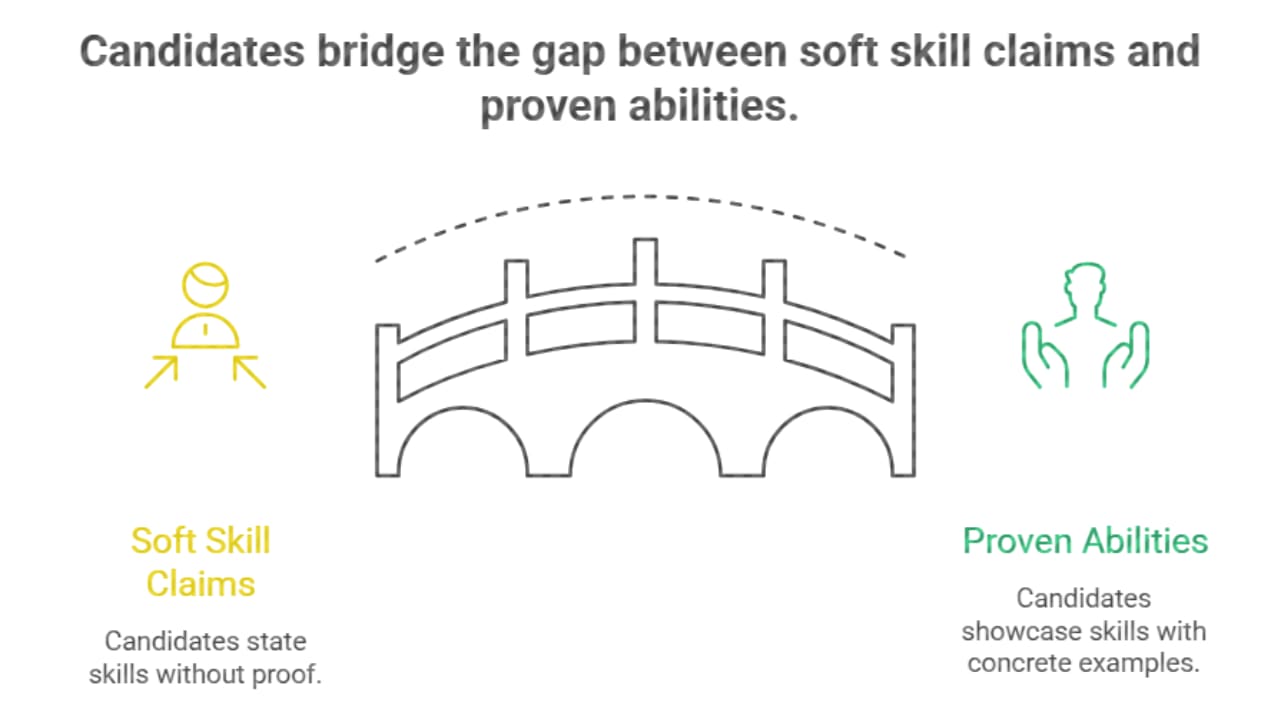
Reciting a list of soft skills convinces nobody anymore. What actually works is proof, usually delivered through a specific story rather than a general claim.
Use real examples from internships, college projects, or part-time work, even small ones, and structure them around what actually happened rather than a generic outcome. "I improved communication with my team," says almost nothing. "I noticed our team was missing deadlines because updates were scattered across three different chat groups, so I set up one shared tracker, and we hit the next two deadlines on time," says a lot, and it's the kind of answer that sticks with an interviewer after the call ends.
Prepare two or three specific stories in advance, each demonstrating a different soft skill, rather than hoping the right example comes to mind under pressure
Practice explaining a technical or complex idea to someone outside your field — a parent, a friend from a different background — since that's genuinely how interviewers test communication skills
Ask for feedback deliberately in your current job or internship, and actually act on it visibly, since this becomes a real story you can use later rather than a hypothetical one
Pay attention to how you react in actual moments of pressure or disagreement at work, since self-awareness about your own patterns is exactly what interviewers are probing for when they ask about weaknesses
What This Looks Like Once You're Actually Hired
Getting the offer is only the first test. A lot of these same skills get evaluated again during probation and the first performance review, often more strictly than during the interview itself. Managers rarely say "your communication skills need work" outright — it usually shows up as feedback like "keep me posted more often" or "loop the team in earlier next time," which is the same thing said more gently. Paying attention to that kind of feedback early and adjusting quickly tends to matter more for long-term growth than how polished your answers sounded in the original interview.
Final Thought
Soft skills stopped being the vague, unmeasurable category they used to be, and interviewers in 2026 have gotten noticeably better at telling the difference between someone who has them and someone who's just memorized the vocabulary. The candidates who stand out aren't the ones with the longest list of buzzwords on their resume — they're the ones who can back every claim with a specific, honest story. Build two or three of those stories properly before your next interview, and you'll be answering a question most candidates still walk in unprepared for.