The STAR Method: How to Really Answer "Tell Me About a Time When."
Published on August 01, 2026
Blogs
How to Really Answer "Tell Me About a Time When."
You know this question the second it comes. Tell me about a time you faced a difficult problem. Describe a situation where you had to deal with someone difficult. Walk me through a deadline you nearly blew. You've lived through the story already, sometimes more than once. So why does it always come out wrong in the room? You start in the middle, backtrack to add context you forgot, and by the time you finally land on the point, the interviewer's eyes have already wandered.
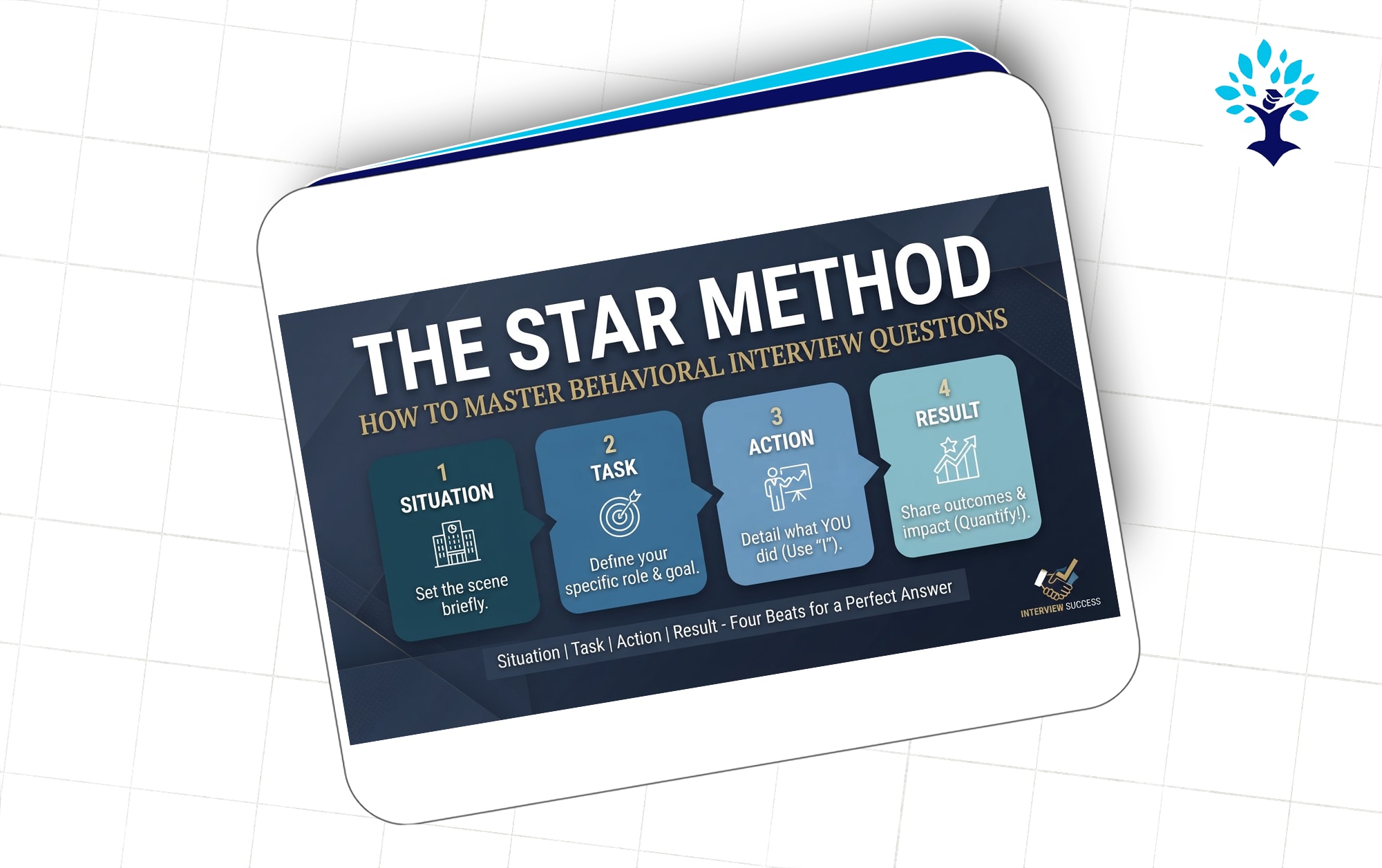
STAR fixes that. Not by making you sound like you're reciting something. It just gives the story a shape. Situation, Task, Action, Result, four beats in order, and suddenly the messy real version of what happened turns into something someone else can follow without much effort. Companies ask these questions because a free-flowing interview doesn't tell them much about anyone. They want a fair way to compare candidates side by side, and this is basically how you meet them there.
Breaking It Down
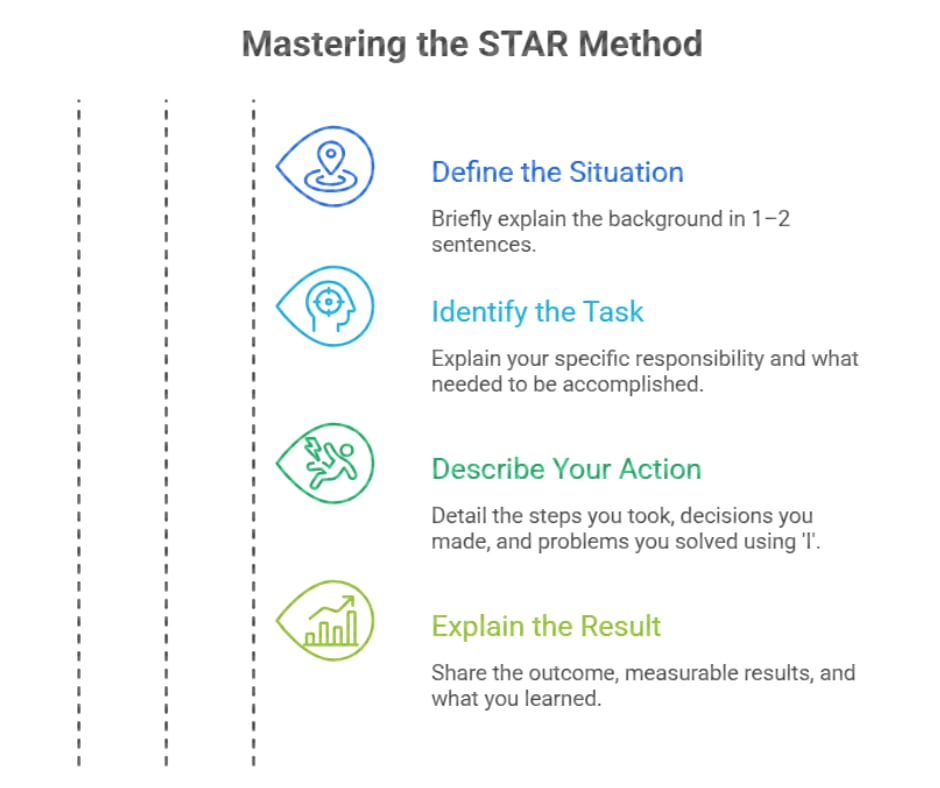
Start small. The Situation is one line, maybe two. Where were you, what was going on? Candidates almost always over-explain this part, which is a shame, because it's the least important piece of the whole thing.
Then comes the Task, and here's where you draw a line around what was yours, specifically. Not the team's goal for the quarter. Yours specifically. What were you on the hook for, personally?
Now the Action. This is the part carrying all the weight, and it's what the interviewer is really listening to. What did you do in order? Say "I." Not "we." The second "we decided this" slips out, the interviewer loses track of what you brought to the table, and that's the entire point of asking in the first place.
Close it out with the Result. What happened after all that? A number helps more than people expect. A percentage, a timeframe, anything with an edge to it. "It went well" doesn't give an interviewer anything to hold onto. Toss in a line about what you took from it if there's room. Costs one sentence and shows you think about your own work instead of just moving past it.
Here's What It Sounds Like Together
Say the question is "tell me about a time you had to meet a tight deadline." A project deadline was moved up two weeks, no warning, right in the middle of an already full quarter. That's your Situation and Task in one breath. The Action: split the work into tiers by priority, pushed two lower-impact pieces to the next sprint with a manager's sign-off, brought a teammate in to run part of it in parallel. The Result: hit the new date, and the client renewed for another quarter afterward.
Say that out loud. It takes maybe forty-five seconds. Nothing wasted, nothing thrown in just to sound thorough. Enough to be believable, and an outcome worth mentioning.
The Places This Usually Falls Apart
Way too much time on the setup, not enough left for the Action, which is the part doing the real work
Talking about what "the team" pulled off instead of what you did
Ending on something soft like "it worked out fine" instead of a real number
An example too small to say much about the skill being tested at all
Going past two minutes, which loses even someone who was into it a minute ago
Using the same story for everything, whether it fits the question or not
None of these sinks you on their own. Two or three of them stacked together, and the whole answer stops landing the way you meant it to. Small mistakes in an interview can sometimes create bigger doubts than candidates realize. Knowing the common interview red flags can help you spot these issues early and avoid making them in your next interview.
You Can't Wing This the First Time
Nobody sounds sharp doing this cold, not in the actual interview. The people who come across calm almost always built out a few stories beforehand and bent them slightly toward whatever landed in front of them.
Six to eight stories is a reasonable target, spread across different grounds. Something you led. A conflict you handled. A failure that taught you something real. A deadline that got tight fast. A coworker who wasn't easy to work with. Practice out loud, not just in your head or on paper. A story that reads fine written down often comes out clumsy the first time you speak it, so let that awkward version happen at home, alone, not in front of the person deciding whether to hire you. Time it too. Sixty to ninety seconds per story tends to work. Push past that, and even a good story starts losing people around the edges.
Match the Story to What's Being Asked
Interviewers aren't just collecting stories they find interesting. They're checking for something specific: leadership, how you handle pressure, whether you can resolve conflict without making it worse. And one habit trips people up more than they'd expect: forcing a favorite, well-rehearsed story into a question it doesn't quite answer.
If someone asks about handling conflict and your strongest story is really about a deadline, don't stretch it to fit just because it's the one you know best. Grab the rougher story instead, the one that fits what was really asked. It'll land better than a smooth answer aimed at a slightly different question. This is the real argument for keeping several stories ready rather than perfecting just one or two. You want a few options in your back pocket, not one script you're constantly trying to twist into new shapes.
Situational Questions Bend the Rules Slightly
Sometimes the question skips the past entirely and asks about a hypothetical instead. "What would you do if a client missed three deadlines in a row?" The shape shifts a little here. Reframe the scenario back so the interviewer knows you understood it right. Talk through how you'd think it through before jumping straight to a fix. Walk through the steps in order. Close with what a realistic, good outcome would look like. A short line about what you'd take from a situation like that goes further than people expect, and most candidates skip it entirely.
Final Thought
None of this is about sounding polished for its own sake. It's about handing the person across the table something they can work with instead of a story that trails off before it goes anywhere. Get a few stories ready ahead of time. Let the Action carry most of the weight. Land on something real at the end. Say a handful of these out loud enough times before the actual interview, and eventually the structure stops feeling like homework. It just turns into how you talk about your own work, naturally.