Why Most Science Students Regret Their Career Choice After 12th
Published on July 22, 2026
Blogs
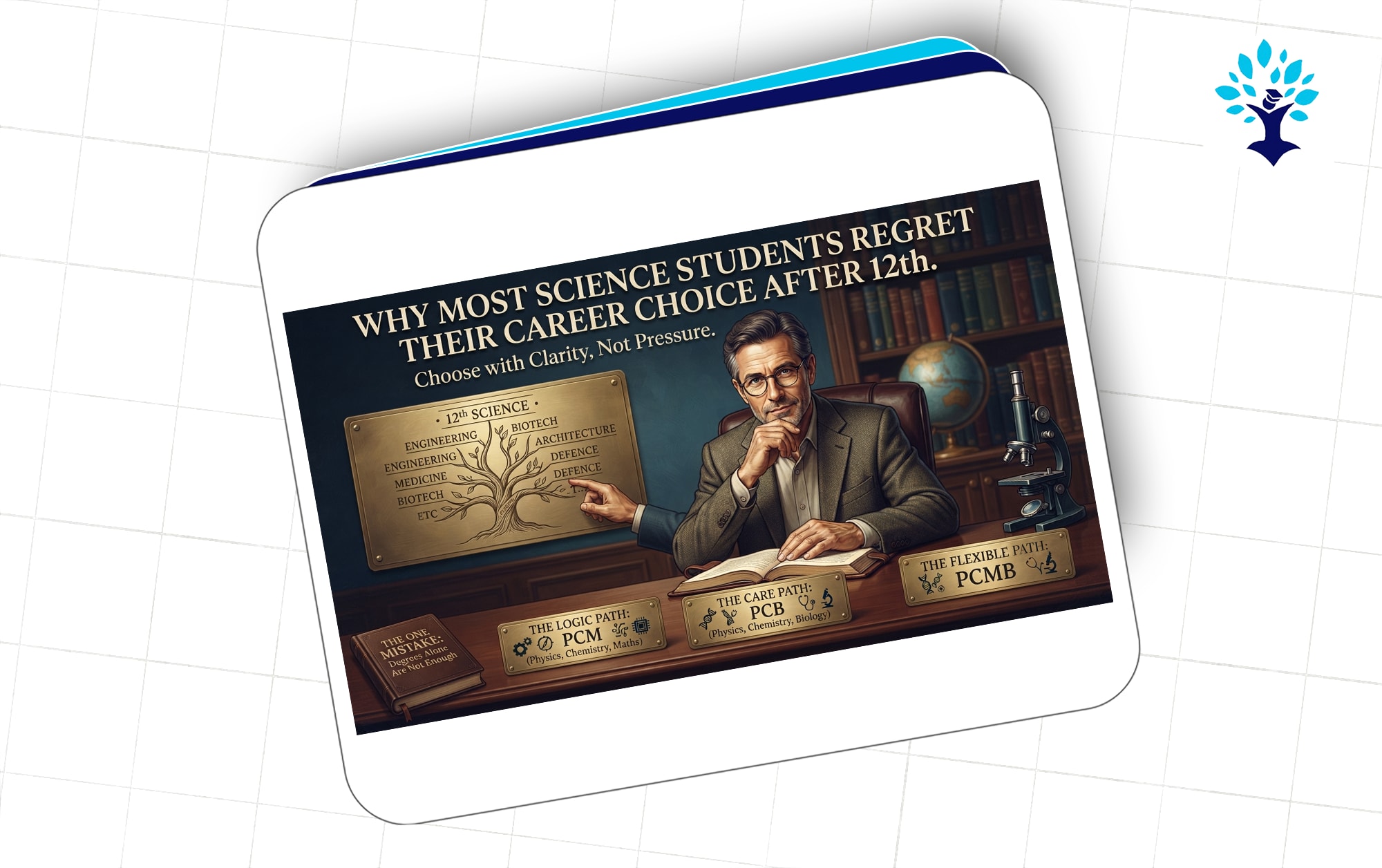
Science Students' Career Choice After 12th
Let me be honest with you right at the start.
Most students who choose the Science stream after 12th do so for one of three reasons — their parents wanted it, their friends were doing it, or they believed it was the "safe" choice. And while Science genuinely is one of the most powerful career pathways available to you, choosing it without understanding what it actually demands can quietly set you up for frustration three to four years down the line.
I have spoken to hundreds of students and young professionals over the years. The ones who thrive in Science-based careers share one thing in common — they chose it because their mind naturally works a certain way. Analytical. Curious. Problem-first. If that sounds like you, keep reading. If you are still figuring that out, this article will help you decide.
Science Is Not One Stream — It Is a Branching System
Here is something your school likely never explained clearly: Science is not a single path. It is a branching system that splits based on your subjects, and each branch leads to a fundamentally different career ecosystem. Getting this right early saves you years of regret.
PCM — Physics, Chemistry, Mathematics
PCM is for students who think in systems, patterns, and logic. If you genuinely enjoy solving problems — not just memorizing formulas, but actually understanding why something works — PCM is your natural territory.
The highest-value career paths from PCM today are:
Engineering (B.Tech / BE): The most popular PCM destination, but also the most misunderstood. Here is the truth that coaching centres will never put on their brochures — getting into an engineering college is easy. Getting a job that pays well after engineering is not. Placement and salary in engineering are purely skill-driven. Your degree gets you into the room. Your skills decide what happens once you are there. The specialisations that sit in top salary brackets right now are Computer Science, Artificial Intelligence, Information Technology, and Robotics. If you are going into engineering, go deep into one of these.
BCS vs BCA — Know the Difference: A Bachelor of Computer Science (BCS) builds pure technical depth — algorithms, data structures, systems design. A Bachelor of Computer Applications (BCA) blends technology with business thinking, making it ideal for startup roles, SaaS companies, and product management careers. Both are excellent. The question is which version of a tech career excites you more.
Architecture and Urban Planning: India is urbanising at a pace the world has rarely seen. Architects and urban planners are not just building homes — they are shaping the future of cities. If you have a spatial mind and love design as much as logic, this is a seriously underrated path with growing demand.
Defence (NDA): For students who want structured leadership, national purpose, and lifelong respect, the National Defence Academy route is one of the most fulfilling careers available. It offers clarity, community, and a defined growth trajectory that very few corporate paths can match.
The Diploma Route — For Those Who Want to Move Fast
If you already know you want to be in the engineering domain and want to skip four years of theory-heavy college life, a 3-year Diploma programme is a legitimate fast-track. You build industry-relevant skills quickly, enter the workforce earlier, and can lateral into a degree programme later if needed. It is not a compromise — it is a strategy.
PCB — Physics, Chemistry, Biology
PCB is the gateway to one of the most respected and stable professional ecosystems in India — healthcare. But it asks something significant in return: time.
Be clear-eyed about this before you commit. A career in medicine typically requires 5 to 10 years of education before you reach full professional independence. MBBS followed by an MD or MS specialisation. BDS for dental practice. Nursing, Pharmacy, and allied health roles for those who want to enter the healthcare ecosystem through faster, equally impactful routes.
There are also two Biology-based paths that most students completely overlook.
Biotechnology is one of the most future-proof fields on the planet right now — covering DNA sequencing, vaccine development, and genetic engineering. If you have a research-oriented mindset and are drawn to science at its frontier, Biotechnology deserves serious consideration.
Home Science — which branches into Nutrition, Food Technology, and Dietetics — is another quiet career that is gaining genuine market momentum as health awareness rises across India.
PCMB — The Flexibility Advantage
If you studied all four subjects, you hold a strategic advantage most students do not — the freedom to keep both the technology and healthcare doors open until you are ready to commit. Use that advantage deliberately.
The One Mistake That Derails Science Students
It is the assumption that a degree is enough.
In today's job market, especially in Science and Engineering, the candidates who get hired — and who get paid well — are the ones who have built real skills alongside their degree. Projects. Internships. Certifications. Problem-solving portfolios. Whatever your path, start building demonstrable skills from your first year. Your degree tells an employer you showed up. Your skills tell them you are worth investing in.
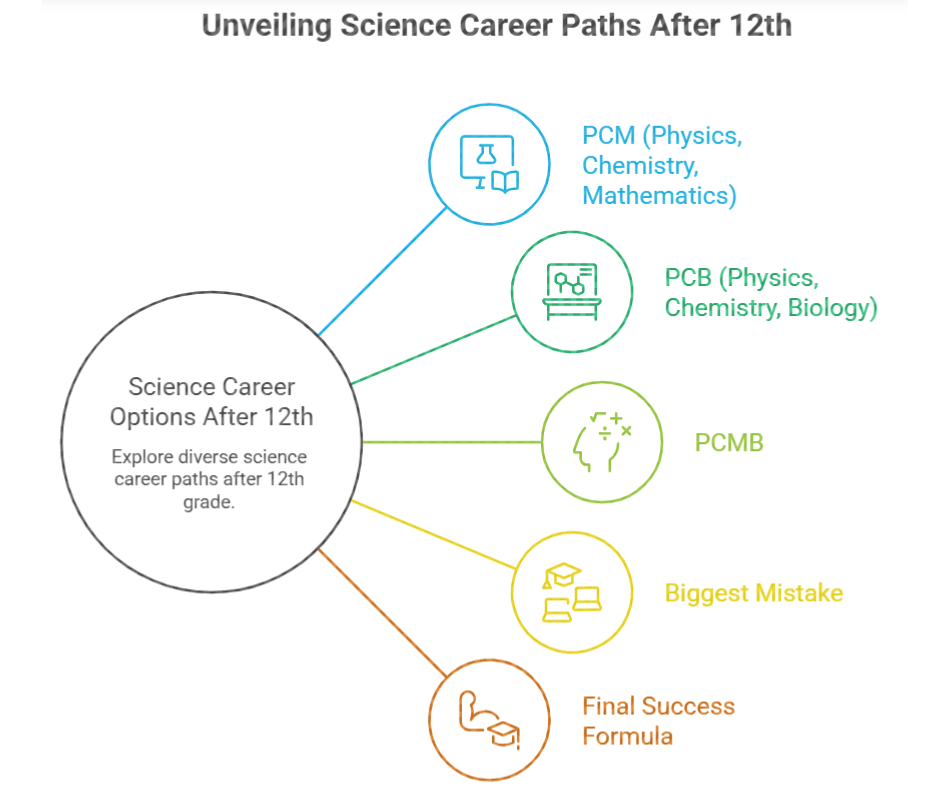
A Final Word Before You Decide
Science is a powerful stream. But it rewards those who respect it — who come in prepared, who stay curious, and who never stop building. Once you've built the right skills and are ready to enter the job market, make sure you're equally prepared for the hiring process by practicing the Most Common interview questions employers ask during campus placements and job interviews. If that is the kind of student you are, Science will give back more than you put in.
Choose with clarity, not pressure. And once you choose, go all in.